

This page is supervised by a specialist physician at IC Clinic Shinjuku, located a 3-minute walk from JR Shinjuku Station.
A Complete Guide to Infected (Inflammatory) Epidermoid Cyst Treatment in Tokyo (Shinjuku)
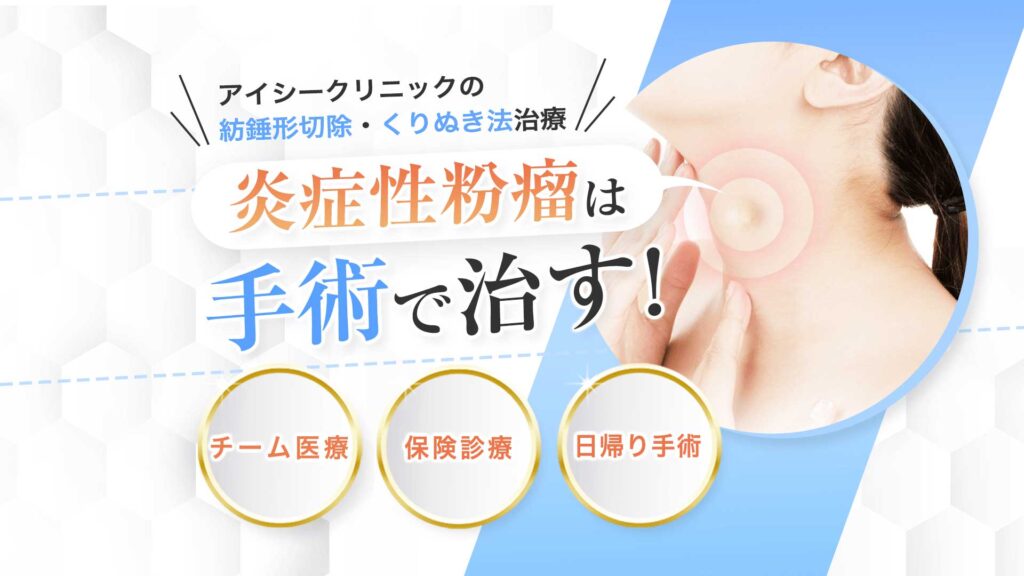
An infected epidermoid cyst (inflammatory atheroma) is an epidermoid cyst in its early stage that has been invaded by bacteria, resulting in inflammation and suppuration.
Because an infected epidermoid cyst progresses from a standard epidermoid cyst and becomes painful, prompt medical treatment is necessary rather than leaving it untreated.
In this article, we explain the characteristics, causes, and treatment options for infected epidermoid cysts in and around Tokyo (Shinjuku).
Even if you are worried that you may have an infected epidermoid cyst, we have provided a careful explanation of how treatment proceeds, so please use this as a reference.
What Is an Infected Epidermoid Cyst (Atheroma)? Symptoms and Causes

In its early stages, an epidermoid cyst is typically painless and feels like a firm lump when touched.
However, when bacteria invade and cause inflammation, the cyst becomes red and swollen and is accompanied by pain.
This condition is referred to as an infected epidermoid cyst or suppurative epidermoid cyst.
※ Throughout this article, we will use the term “infected epidermoid cyst” consistently.
Risks of Leaving an Atheroma (Epidermoid Cyst) Untreated: Suppuration and Odor
The greatest danger of leaving an atheroma (epidermoid cyst) untreated is that, over time, the waste material accumulated inside can decompose, or bacteria can enter from outside and cause infection, leading to inflammation and suppuration.
- Progression of inflammation and suppuration:
The interior of an epidermoid cyst is prone to accumulating dead skin cells and sebum, creating an environment in which bacteria can easily multiply.
In particular, when bacteria enter through the “punctum” (the small opening on the skin surface), infection can spread rapidly and trigger inflammation.
Once inflammation occurs, the cyst becomes red and swollen, accompanied by a throbbing, intense pain.
As the condition worsens further, pus accumulates inside, resulting in a state similar to a boil. The area becomes warm to the touch and the skin surface begins to protrude. - Development of odor:
The old keratin and sebum that have built up inside the cyst are broken down by bacteria, producing a distinctive unpleasant odor.
This smell can become strong enough to be noticed not only by the patient but also by those around them, causing significant psychological distress in daily and social life. - Rupture and increased complexity of treatment:
When suppuration advances and the internal pressure reaches its limit, the cyst may rupture spontaneously, discharging pus and decomposed contents.
While this may temporarily relieve pain, it makes it easier for additional bacteria to enter through the ruptured wound, and there is a risk that inflammation may spread to the surrounding skin or cause a widespread skin infection known as cellulitis.
In addition, a ruptured cyst tends to adhere to surrounding tissue, making subsequent surgery more complex and increasing the likelihood that scarring will remain. - Enlargement:
Repeated cycles of inflammation and rupture can cause the cyst sac to grow even larger, potentially compressing surrounding tissue or becoming conspicuous as a large lump.
The larger the cyst grows, the wider the scope of surgery required, which also affects cost and recovery time.
As described above, leaving an atheroma (epidermoid cyst) untreated does not simply cause cosmetic concerns—it increases the risk of pain, odor, and more serious infection, and may complicate treatment.
For this reason, if you notice symptoms of an epidermoid cyst, it is important to visit a medical institution promptly and receive appropriate treatment.
Self-Treatment (Squeezing It Yourself) of an Atheroma (Epidermoid Cyst) Should Be Avoided
Some people, bothered by the appearance or discomfort of an atheroma (epidermoid cyst), may consider squeezing it themselves.
However, please avoid self-treating an epidermoid cyst.
Squeezing it yourself carries various serious risks and is very likely to worsen symptoms.
Attempting to squeeze an epidermoid cyst yourself can cause the following problems:
- Greatly increased risk of bacterial infection:
Using fingers, fingernails, or unclean needles to squeeze the cyst can injure the skin, making it extremely likely that large numbers of bacteria will enter the interior of the cyst sac.
This can cause further worsening of inflammation, promote suppuration, and increase the risk of serious infections such as cellulitis in the surrounding skin. - Worsening inflammation and increased pain:
Forcibly squeezing the cyst may rupture the internal sac and allow its contents to spread into the surrounding tissue, triggering a strong inflammatory response.
This can significantly worsen symptoms such as intense pain, swelling, and a sensation of warmth, and substantially interfere with daily life. - Formation of scars:
When inflammation or infection becomes severe, noticeable scars tend to form during the healing process.
Particularly on visible areas such as the face, this may present a cosmetic concern. - Risk of recurrence:
The fundamental treatment for an epidermoid cyst is complete removal of the “sac” that causes it, not just the contents.
Even if you squeeze it yourself, as long as any part of the sac remains, the contents will accumulate again over time and the cyst will very likely recur.
Repeated recurrences can also make treatment more difficult. - Delayed diagnosis:
Attempting self-treatment may delay the timing of seeking medical care.
Although rare, malignant tumors that resemble epidermoid cysts in appearance do exist.
Consulting a specialist allows for an accurate diagnosis and an appropriate treatment plan.
An atheroma (epidermoid cyst) requires appropriate treatment by a dermatologist or plastic surgeon.
If you have any concerning symptoms, please do not attempt to manage them on your own, and visit a medical institution promptly.
A specialist will recommend the most suitable treatment approach based on the presence of inflammation, the size of the cyst, and its condition.
Causes of an Atheroma (Epidermoid Cyst) Growing Larger and How to Address It
Once an atheroma (epidermoid cyst) forms, it rarely disappears on its own, and in most cases it gradually grows larger over time.
The main reason it grows is the continuous accumulation of old keratin and sebum that are constantly being produced inside the sac.
- Continuous production of contents:
The cyst sac is formed from an inverted portion of skin.
As a result, the cells lining the inside of the sac continue to produce keratin just like normal skin.
The gradual buildup of this keratin and sebum within the sac causes the cyst to slowly enlarge. - Repeated episodes of inflammation:
When a cyst becomes inflamed, the surrounding tissue swells, making the cyst itself feel temporarily larger.
Even after the inflammation subsides, contents accumulate again, and each subsequent episode of inflammation can cause the cyst to grow even larger, creating a vicious cycle.
Repeated inflammation can cause the walls of the sac to thicken and adhere to surrounding tissue, contributing to further enlargement. - Irritation and friction:
Chronic physical irritation from clothing rubbing against the skin, physical pressure, or similar factors can make the cyst more prone to inflammation, which in turn may cause it to grow larger.
How to Address an Atheroma (Epidermoid Cyst) That Has Grown Larger:
When a cyst grows larger, not only do symptoms such as pain and odor become more pronounced, but cosmetic concerns and everyday inconveniences also increase (such as catching on clothing or getting in the way when sitting).
The larger it grows, the wider the area that must be incised during surgery, making it more likely that scarring will remain.
Therefore, if you notice that an atheroma (epidermoid cyst) has been growing, it is important to consider the following points and visit a medical institution promptly.
- Early consultation with a specialist:
Treating a cyst while it is still small reduces the burden of surgery and makes it easier to minimize the visibility of scarring.
Before the cyst grows larger, visit a specialist such as a dermatologist or plastic surgeon to receive an appropriate diagnosis and discuss a treatment plan. - Considering appropriate surgery:
The definitive treatment for an epidermoid cyst is surgery to completely remove not only the contents but also the “sac” (cyst wall).
Ideally, surgery should be performed when no inflammation is present.
If inflammation is present, the approach is typically to first perform a procedure to reduce the inflammation (such as incising the cyst to drain the pus), and then to schedule a separate surgery to remove the sac at a later date. - Avoiding self-judgment and self-treatment:
In a cyst that has grown larger, internal pressure is even higher, so attempting to squeeze it yourself increases the risk of infection and more severe inflammation.
Please do not touch it or attempt to squeeze it based on your own judgment.
The size and condition of each epidermoid cyst differs from person to person.
Receiving a diagnosis from a specialist and selecting the treatment approach most suited to your individual situation is the first step toward a safe and effective resolution.
What Are the Symptoms of an Infected Epidermoid Cyst?
When an epidermoid cyst becomes inflamed or suppurates, it becomes red and swollen and is accompanied by pain.
In cases of severe suppuration, the sac-like structure beneath the skin is damaged and pus accumulates inside.
This condition is also referred to as an abscess and is associated with intense pain.
The Medical Cause of Inflammation in an Epidermoid Cyst
Bacteria entering through the punctum (the opening) at the center of the cyst is the medical cause of inflammation.
An epidermoid cyst is essentially a benign tumor that forms when waste material such as dead skin cells and sebum accumulates beneath the skin.
Because epidermoid cysts do not heal on their own, they gradually develop into larger sac-like structures as the condition worsens. Inflammation is triggered when bacteria enter this sac.
(※ Reference: What Is an Epidermoid Cyst?)
The interior of an epidermoid cyst sac is structurally devoid of the cells responsible for immunity (the function that eliminates bacteria and other pathogens that enter the body), which makes it particularly vulnerable to bacterial infection.
In particular, touching or squeezing the cyst out of concern can introduce bacteria and cause an infected epidermoid cyst, so please try to leave it alone as much as possible.
The Psychological Cause of Inflammation in an Epidermoid Cyst
A psychological sense of complacency—such as thinking “it’s just a lump, so it’s fine to leave it alone” or “it’s a benign tumor, so it shouldn’t cause any problems”—can also be considered a contributing factor in the development of an infected epidermoid cyst.
As mentioned above, epidermoid cysts do not heal on their own and are susceptible to bacterial infection.
Nevertheless, some patients leave a cyst untreated and only seek medical care after inflammation develops and pain sets in.
We strongly encourage everyone reading this article not to leave a cyst untreated, and to contact a medical institution capable of treating epidermoid cysts as soon as possible.
【Important】Visit a Clinic Before an Infected Epidermoid Cyst Ruptures

An infected epidermoid cyst has progressed beyond a standard epidermoid cyst, and the associated risks are greater.
Touching it carelessly may cause it to rupture, so please visit a medical institution for examination before that happens.
In fact, the risk of rupture lurks in the course of everyday life.
In the following sections, we will look at the causes of rupture in infected epidermoid cysts, as well as what to do if the contents come out.
Knowing this information can help prevent your symptoms from worsening due to rupture before you are able to seek medical care.
Causes of Rupture in an Infected Epidermoid Cyst
An infected epidermoid cyst often ruptures with even a slight impact.
When an epidermoid cyst becomes infected with bacteria and develops into an infected epidermoid cyst, the sac-like structure becomes fragile and prone to tearing.
A cyst that initially feels like a firm lump gradually becomes softer as inflammation progresses, and it becomes possible to feel warmth in the area when touched.
In this softened state, even slight contact or pressure can cause it to rupture, and pus may be discharged.
If the sac tears, pus spreads to the surrounding area and the inflammation worsens further.
The cyst becomes red and swollen, and as it progresses, the opening also becomes eroded and widens, discharging foul-smelling pus and the contents of the sac.
The state in which pus is discharged naturally in this way is referred to as “self-rupture” (jihai).
What to Do If an Epidermoid Cyst Ruptures and Its Contents Come Out
If a cyst ruptures during daily life and its contents come out, please seek medical care as soon as possible.
In cases of severe suppuration, an incision and drainage procedure may be performed, in which the skin is incised and the accumulated pus is drained.
Because this involves a surgical procedure, it is advisable to visit a hospital or clinic with experience in epidermoid cyst surgery.
If you have ruptured an epidermoid cyst yourself, please consult IC Clinic.
If you were touching an epidermoid cyst and it ruptured, becoming red and swollen, please contact IC Clinic immediately.
Infected epidermoid cysts are prone to scarring, so treatment should be sought as early as possible.
We propose treatment approaches aimed at minimizing discomfort and making scarring as inconspicuous as possible, so you can feel at ease.
In addition, epidermoid cyst surgery at our clinic is covered by health insurance, so you can proceed with treatment without concern about cost.
Surgery is often completed in about 20 minutes or less, making same-day, outpatient surgery possible in many cases.
If you have any concerns about an epidermoid cyst, please do not leave it untreated—feel free to consult IC Clinic.
Treatment Options for Atheroma (Epidermoid Cyst) | Surgical Removal as the Standard Approach
An atheroma (epidermoid cyst) cannot be cured with medication alone.
The standard approach for definitive treatment is surgery to completely remove not only the accumulated contents but also the “sac” (cyst wall) that is the underlying cause.
In this section, we explain the main surgical methods for treating an atheroma (epidermoid cyst), their characteristics, and the possibility of same-day outpatient surgery.
Surgical Methods for Atheroma (Epidermoid Cyst): Punch Excision (Punching Method) and Incision Method
There are two main surgical methods for treating an atheroma (epidermoid cyst): the “punch excision (punching method)” and the “incision method.”
The choice between the two is determined by the physician based on factors such as the size and location of the cyst and whether inflammation is present.
| Surgical Method | Features (Advantages) | Disadvantages / Points to Note | Applicable Cases |
| Punch Excision (Punching Method) | ・Minimal scarring: Because the contents and sac are removed through a small hole only a few millimeters in diameter, the resulting scar is less noticeable. ・Faster recovery: Little or no suturing is required, so there tends to be less post-operative swelling and pain, and the healing period is shorter. ・Less physical burden: The procedure is completed in a short time and can be performed under local anesthesia only. |
・Not suitable during inflammation: When inflammation is severe or suppuration is present, the sac may become fragile and complete removal may not be possible, so this method is often not chosen in such cases. ・Risk of recurrence: In very rare cases, part of the sac may remain, and there is a possibility of recurrence. ・Requires skill: Precisely removing the sac through a small hole demands a high level of physician proficiency. |
・Cysts with no inflammation: Cysts in a stable condition with no redness or pain. ・Relatively small cysts: Those approximately 2 cm in diameter are often indicated, though slightly larger cysts may also be treatable with sufficient skill. ・Particularly recommended for cysts in areas where scarring should be minimized, such as the face or neck. |
| Incision Method | ・Reliable removal: Because the skin is opened more widely, the entire cyst sac can be visually confirmed and reliably removed. ・Applicable even during inflammation: When inflammation or suppuration is severe, the skin can be incised to drain the pus and the sac can sometimes be removed at the same time (though in cases of severe inflammation, drainage alone may be performed first, with sac removal carried out separately at a later date). ・Lower risk of recurrence: Because the sac can be completely removed, the risk of recurrence is very low. |
・Scarring: Because a larger incision corresponding to the size of the cyst is required, scarring tends to be more noticeable than with punch excision. ・Longer recovery period: Suturing is typically required, which can extend the time until suture removal and the overall healing period. ・Somewhat greater physical burden: Although performed under local anesthesia, this method is more invasive than punch excision. |
・Inflamed cysts: Cysts that are red and swollen or have accumulated pus. ・Larger cysts: Cysts with a diameter of 3 cm or more, or cysts located in deeper tissue. ・Cases where punch excision is difficult, or where the cyst has ruptured and adhered to surrounding tissue. |
What Is the Punch Excision (Punching Method) for Atheroma (Epidermoid Cyst)?
The “punch excision,” also known as the “punching method,” is a surgical technique in which a small hole is made at the center of the atheroma (epidermoid cyst)—either using the existing punctum or by making a new small incision—and the cyst sac is then removed through that opening using a specialized instrument.
Procedure outline:
1. Local anesthesia: Local anesthesia is first injected into the cyst and the surrounding area.
2. Small incision or puncture: A small hole approximately 2–5 mm in diameter is made at the center of the cyst, either using the existing punctum or by creating a new opening.
3. Drainage of contents: Pressure is applied through the small hole to discharge the keratin, sebum, and other contents that have accumulated inside the cyst.
4. Removal of the cyst wall: After the contents have been discharged, the sac-like structure (cyst wall) is carefully peeled away and extracted using specialized forceps or similar instruments, until it is completely removed.
Care is taken during this step to avoid tearing the sac.
5. Completion: After confirming that the sac has been completely removed, the wound is typically left to heal naturally without suturing.
In some cases, a small number of sutures may be placed.
The wound is small and generally closes within a few days.
Advantages:
・Cosmetic benefit: The resulting scar is very small and inconspicuous, which is a key advantage of this approach.
It is particularly well suited to areas where cosmetic considerations are important, such as the face and neck.
・Less physical burden: The procedure is short (typically 10–20 minutes) and involves minimal bleeding, placing a lighter burden on the patient.
・Faster recovery: Because the wound is small, there is less post-operative swelling and pain, and patients can generally return to daily activities sooner.
Points to note:
Punch excision is suited to relatively small, non-inflamed epidermoid cysts.
When inflammation is severe or suppuration has already occurred, the sac becomes fragile, making complete removal more difficult, and the incision method is often selected instead.
What Is the Incision Method for Atheroma (Epidermoid Cyst)?
The “incision method” is the most reliable surgical approach, in which the skin directly over the atheroma (epidermoid cyst) is incised and the entire cyst sac is removed under direct visual confirmation.
Procedure outline:
1. Local anesthesia: Local anesthesia is injected into the cyst and the surrounding area.
2. Skin incision: The skin is incised in a spindle (elliptical) shape along the long axis of the cyst, sized appropriately for the cyst.
3. Dissection and removal of the cyst wall: Through the incision, the cyst sac (cyst wall) is carefully separated from the surrounding tissue and completely removed.
Care is taken throughout this step to avoid rupturing the sac.
4. Hemostasis and suturing: Bleeding is controlled and the skin is carefully sutured after removal.
The skin surface is typically sutured with stitches.
5. Completion: The wound is covered with gauze or tape for protection.
A follow-up visit for suture removal will be required at a later date.
Advantages:
・Reliability: Because the entire sac can be removed under direct visual confirmation, there is less chance of leaving any part of the sac behind, and the risk of recurrence is very low—this is a key advantage of this approach.
・Wide applicability: This method can address epidermoid cysts in a variety of conditions, including inflamed cysts, suppurating cysts, large cysts, and cysts with a complex shape.
When inflammation is severe, treatment may proceed in two stages: first incising the cyst to drain the pus, then removing the sac in a separate procedure once the inflammation has settled.
Points to note:
Because the incision method requires a wider incision than punch excision, scarring tends to be more noticeable.
Particularly in visible areas such as the face, the shape and length of the scar may present a cosmetic concern and should be taken into consideration.
The post-operative recovery period also tends to be somewhat longer than with punch excision.
The choice of method should be made after thoroughly discussing the patient’s individual cyst condition and preferences regarding scarring with the physician.
Is Same-Day Outpatient Surgery Possible for Atheroma (Epidermoid Cyst)?
Most athenomas (epidermoid cysts) can be treated with same-day outpatient surgery.
This is because the surgery itself is performed under local anesthesia and can be completed in a relatively short time.
- Typical cases:
For small, stable cysts with no inflammation, surgery can be performed in an outpatient setting under local anesthesia, and patients can go home the same day.
Operating time varies depending on the size and number of cysts and the chosen procedure, but it typically takes anywhere from 10 to 30 minutes.
After surgery, patients receive basic post-operative care and instructions on precautions, then can go home directly. - Advantages of Same-Day Outpatient Surgery:
- Minimal time commitment: Because no hospital stay is required, the impact on daily life and work can be kept to a minimum.
- Reduced psychological burden: There is no need to spend time in an unfamiliar inpatient environment; patients can recover comfortably at home, which also reduces psychological stress.
- Lower financial burden: Since hospitalization costs are not incurred, the overall medical expenses can be kept lower.
- Exceptional cases (where hospitalization may be required):
However, not all athenomas (epidermoid cysts) can be treated with same-day outpatient surgery.
In the following situations, hospitalization may be required, or a more carefully planned approach may be necessary.- Very large cysts: In the case of a very large cyst exceeding several centimeters in diameter, greater blood loss may occur or post-operative care may be more complex, and inpatient monitoring may be recommended.
- Severely inflamed or suppurating cysts: When a cyst has formed an abscess and is severely inflamed, the approach is typically to first incise and drain the pus, and then to schedule a separate procedure to remove the sac a few days later.
Depending on the post-operative condition, a brief hospital stay may be necessary in such cases. - Patients with unstable general health: For patients with serious underlying conditions (such as heart disease or diabetes), inpatient surgery in a more closely monitored setting may be recommended, taking into account the surgical risks involved.
- Cysts in specialized locations: Cases where the cyst is located near a joint or in close proximity to important blood vessels or nerves, where the surgical difficulty is high, may require more careful management.
In principle, same-day outpatient surgery is possible, but the final decision is made by the physician based on the patient’s individual cyst condition and medical history.
At the time of your consultation, please confirm in detail whether same-day outpatient surgery is an option and whether hospitalization may be necessary.
How Much Does Atheroma (Epidermoid Cyst) Surgery Cost? Details on Insurance Coverage
When considering surgery for an atheroma (epidermoid cyst), one of the most common concerns is the cost.
Because epidermoid cyst surgery is generally covered by health insurance, the patient’s out-of-pocket expenses are relatively manageable.
Here we explain the estimated surgery costs and details regarding insurance coverage.
Estimated Cost of Atheroma (Epidermoid Cyst) Surgery
The cost of atheroma (epidermoid cyst) surgery varies depending on the size and location of the cyst, the presence or absence of inflammation, and the surgical method selected.
Initial consultation fees, examination costs, anesthesia fees, and medication costs may also be charged separately.
The following table shows general estimated surgery costs under health insurance coverage (assuming a 30% co-payment).
| Cyst Size / Condition | Estimated Surgery Cost (30% Co-payment) | Notes |
| Small (diameter under 3 cm, no inflammation) | Approx. ¥5,000–¥10,000 | ・Punch excision or small incision is often used. ・This is the case with the lowest estimated cost. ・Initial consultation fee, examination fee, local anesthesia fee, prescribed medication costs (antibiotics, pain relief, etc.), and post-operative care and dressing fees may be charged separately. |
| Medium (diameter 3 cm to under 5 cm, no inflammation) | Approx. ¥10,000–¥15,000 | ・The incision method is often selected. ・As the surgical scope is wider, costs are higher than for small cysts. ・Pathological examination fees may be added in some cases. |
| Large (diameter 5 cm or more, no inflammation) | Approx. ¥15,000–¥25,000 | ・The incision method is typically required. ・Costs are higher as the procedure is more complex and time-consuming. ・Pathological examination fees are almost always incurred. |
| Cyst with inflammation or suppuration | Inflammation management procedure: Approx. ¥3,000–¥5,000 Definitive surgery (at a later date): Above amount plus the relevant size-based surgery cost |
・When suppuration is present, incision and drainage is typically performed first. ・This procedure itself incurs a cost, and a subsequent definitive surgery to remove the cyst sac is then required, so the total cost tends to be higher. ・If inflammation is severe, the number of follow-up visits may increase, adding further consultation and treatment fees. |
【Important Notes】
・The costs above are estimates only and may vary depending on the medical institution, region, and the specific details of treatment.
・In many cases, costs such as initial consultation fees, follow-up consultation fees, examination fees (e.g., pathological examination), anesthesia fees, prescribed medication costs (antibiotics, pain relief, antiseptic, etc.), and post-operative care fees will be charged separately from the surgery fee.
Including these costs, the total amount may be higher than the estimates above.
・Depending on your health insurance association or municipality, high-cost medical expense assistance schemes or medical subsidy programs may be available, so it is worth checking.
・For accurate cost information, please contact the medical institution you wish to visit directly, or confirm with your physician or reception staff at the time of your appointment.
Is Epidermoid Cyst Surgery Covered by Health Insurance?
In conclusion, atheroma (epidermoid cyst) surgery is covered by health insurance in most cases.
This is because an epidermoid cyst is medically classified as a “benign skin tumor” and is considered a condition requiring treatment due to the risk of inflammation and infection.
As a result, patients can receive surgery at a cost corresponding to their co-payment ratio (typically 30%, 10%, or 20%).
Cases Covered by Insurance:
・When treatment is deemed medically necessary:
- The cyst has grown large enough to interfere with daily life (e.g., rubbing against clothing, causing pain when sitting).
- The cyst is inflamed or has become suppurating.
- Pain or odor is present.
- Even when the patient is concerned about appearance, if the physician determines medical necessity.
Cases That May Not Be Covered by Insurance:
・When treatment is determined to be purely cosmetic in purpose:
- If a cyst is very small, completely asymptomatic, and of low medical necessity, yet surgery is requested solely for cosmetic reasons (i.e., simply wanting to improve appearance), it may not be covered by insurance.
In this case, the treatment falls under “private pay” (self-funded) care, and the full cost is borne by the patient.
However, given that most athenomas (epidermoid cysts) carry a future risk of inflammation and changes in appearance, they tend to qualify as medically indicated conditions, and cases judged to be purely cosmetic in nature are uncommon.
Diagnostic documentation and pathological examination:
When surgery is performed under health insurance, the excised tissue is typically submitted for pathological examination.
This is an important examination performed to confirm that the cyst is not malignant or that it is not another type of skin condition.
The results of this examination serve as the formal basis for a diagnosis of “atheroma (epidermoid cyst).”
The importance of confirming with the medical institution:
Before undergoing surgery, always check with the reception staff or attending physician at the medical institution: “Will this be covered by health insurance?”
Some cosmetic surgery clinics specialize in self-funded care, so confirming in advance is important.
Because leaving an atheroma (epidermoid cyst) untreated may lead to problems such as inflammation and infection, we recommend seeking appropriate treatment under health insurance coverage if you have any concerning symptoms.
Treatment Methods for Infected Epidermoid Cysts
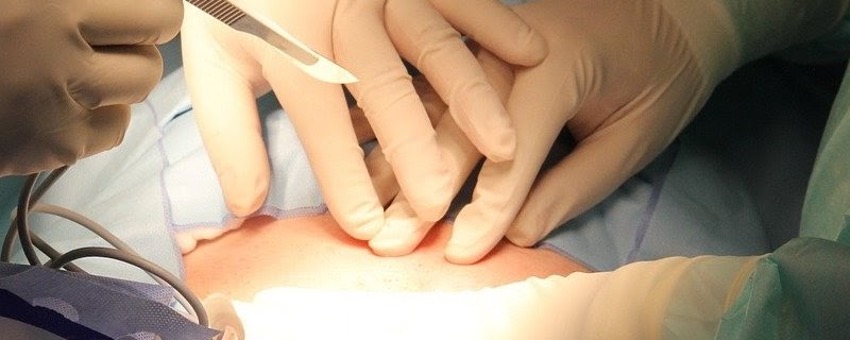
How is an epidermoid cyst treated when it has become inflamed?
The definitive treatment for an infected epidermoid cyst is surgical intervention.
Specifically, there are two surgical methods: “spindle excision” and “punch excision (punching method).”
Let us look at each treatment method in turn.
(1) Treatment Method: “Spindle Excision”
Because reducing the inflammation is the priority, an “incision and drainage” procedure is performed before surgery.
“Incision and drainage” refers to a procedure in which the skin is first made with a small incision to drain the pus (incision and drainage).
Once the inflammation has resolved, the cyst removal surgery is performed.
The surgical method is straightforward: the skin is incised in a spindle shape, the cyst is removed, and the wound is then sutured closed.
With careful suturing, the scar will become less noticeable over time.
For infected epidermoid cysts, this approach tends to result in better post-operative outcomes than insisting on punch excision.
(2) Treatment Method: “Punch Excision (Punching Method)”
The “punch excision” method involves making a small hole in the cyst using a specialized punch-like instrument, squeezing out the contents of the cyst through that opening, and then extracting the deflated cyst sac.
The punch excision method is generally described as having the advantages of producing “smaller, less noticeable scarring” and “a very short operating time.”
Even for infected epidermoid cysts, same-day outpatient surgery using the punch excision method may be possible, depending on the physician’s assessment.
→ For more details about epidermoid cyst (atheroma) surgery, please see the article ‘What Is an Epidermoid Cyst (Atheroma)? A Guide to Receiving Treatment with Confidence.’
Are Medications Effective for Infected Epidermoid Cysts?
In treating an infected epidermoid cyst, antibiotics may be prescribed to help reduce the inflammation.
While taking antibiotics may relieve pain, it is important to understand that this only means the infection causing the pain has subsided—it does not mean the cyst itself has been removed.
This approach is effective against infection, but is not sufficient as a definitive treatment for an epidermoid cyst on its own.
Surgical intervention is still necessary for definitive treatment of an epidermoid cyst.
Treatment Costs for Infected Epidermoid Cysts
Please be assured that diagnosis, examination, surgery, and pathological examination for epidermoid cyst treatment are covered by health insurance.
The following are estimated treatment costs at IC Clinic.
| Estimated Epidermoid Cyst Surgery Costs (30% Co-payment) | ||
| Exposed areas | Under 2 cm | Approx. ¥5,000–¥6,000 |
| 2 cm to under 4 cm | Approx. ¥11,000–¥12,000 | |
| 4 cm or more | Approx. ¥15,000–¥16,000 | |
| Non-exposed areas | Under 3 cm | Approx. ¥4,000–¥5,000 |
| 3 cm to under 6 cm | Approx. ¥10,000–¥11,000 | |
| 6 cm or more | Approx. ¥12,000–¥14,000 | |
| ※ As there have been reports of malignant tumors developing from epidermoid cysts, pathological examination is in principle performed based on the physician’s judgment. ※ In cases of multiple cysts, simultaneous surgery on adjacent sites may be possible in some cases, subject to the physician’s examination. ※ In addition to the surgery costs above, a consultation and prescription fee of approximately ¥1,000, an examination fee of approximately ¥1,000, and a pathological examination fee of approximately ¥3,000 will be incurred. |
||
| Estimated Epidermoid Cyst Surgery Costs (10% Co-payment) | ||
| Exposed areas | Under 2 cm | Approx. ¥2,000 |
| 2 cm to under 4 cm | Approx. ¥4,000 | |
| 4 cm or more | Approx. ¥5,000 | |
| Non-exposed areas | Under 3 cm | Approx. ¥1,500 |
| 3 cm to under 6 cm | Approx. ¥3,500 | |
| 6 cm or more | Approx. ¥4,500 | |
| ※ From October 1, 2022, patients aged 75 and over with a certain level of income will have a different out-of-pocket co-payment ratio for medical costs. ※ As there have been reports of malignant tumors developing from epidermoid cysts, pathological examination is in principle performed based on the physician’s judgment. ※ In cases of multiple cysts, simultaneous surgery on adjacent sites may be possible in some cases, subject to the physician’s examination. ※ In addition to the surgery costs above, a consultation and prescription fee of approximately ¥300, an examination fee of approximately ¥300, and a pathological examination fee of approximately ¥1,000 will be incurred. |
||
Frequently Asked Questions About Infected Epidermoid Cysts
Finally, here are some frequently asked questions about epidermoid cysts. Please refer to any sections that are relevant to your concerns.
If your epidermoid cyst has turned red, we recommend visiting a clinic even if it is not painful.
This is because the cyst has already progressed to a mild level of inflammation, and leaving it untreated may cause the redness to intensify, leading to swelling and pain.
Even if surgery is ultimately required, addressing it early can help minimize the visibility of any scarring.
Therefore, if your epidermoid cyst is red even without pain, please visit a clinic.
Malignant transformation of an epidermoid cyst is extremely rare.
There is no way to distinguish a standard epidermoid cyst from a malignant one based on symptoms or appearance alone, but pathological examination of the contents removed during surgery can determine whether the cyst is malignant.
For Infected Epidermoid Cyst Treatment in Tokyo (Shinjuku), Please Consult IC Clinic Shinjuku
In this article, we have covered the characteristics, causes, treatment methods, and costs associated with infected epidermoid cysts.
Because an infected epidermoid cyst represents a progression from a standard epidermoid cyst, it is important to pursue definitive treatment through surgery as soon as possible.
To reduce the chance of post-treatment scarring as much as possible, we encourage you not to leave the condition untreated and to come in for a consultation.
At our clinic, we can propose surgical approaches suited to your specific symptoms, with the aim of minimizing discomfort and keeping scarring as inconspicuous as possible.
If you are troubled by an infected epidermoid cyst, please feel free to consult us.
Four Key Features of IC Clinic
(1) We provide specialized treatment focused on results.
Our experienced specialist physicians are committed to outcome-oriented treatment designed to minimize the burden on each patient.

(2) We propose treatment plans tailored to each patient’s symptoms and wishes.
While listening carefully to each patient’s concerns and worries, we provide the treatment plan best suited to their individual needs.

(3) Minimizing discomfort and keeping scarring as clean as possible!
From our broad range of treatment options, we select the approach that minimizes discomfort and leaves as little lasting impact as possible after the procedure.

(4) A clinic where patients of all ages and genders feel comfortable consulting us.
We strive to create a clinic environment where anyone—regardless of age or gender—feels at ease coming to us with their concerns.