

Clogged Pores & Comedone Removal Treatment | IC Clinic Shinjuku
The dark spots on your nose that catch your eye every time you look in the mirror, the rough texture around the nostrils — clogged pores are one of the most common skin concerns people face.
Have you tried over-the-counter pore strips or cleansers, only to find that the results are temporary and your pores quickly return to the same state? In fact, in most cases, self-care alone does not address the root cause of comedones.
At our clinic, we carefully assess the condition of your pores and propose an optimal treatment plan from multiple approaches — including Dermapen Microneedling, Chemical Peeling, and laser treatments. This page covers everything you need to know about pore improvement: the mechanisms behind comedone formation, the pitfalls of DIY care, and how to choose the right clinic treatment.
What Causes Clogged Pores? 5 Mechanisms Behind Comedone Formation

Comedones are plugs formed when sebum secreted from the pores mixes with dead skin cells and hardens. Left untreated, they oxidize and cause dark discoloration, and can also create an environment conducive to acne. The following five factors are closely involved in comedone formation.
Excess Sebum Production
Sebum plays an important role in protecting the skin from dryness and external irritants. However, when sebum output increases due to hormonal imbalances or excessive intake of carbohydrates and fats, sebum can accumulate inside the pores.
One often-overlooked factor is over-washing. When too much sebum is stripped away, the skin responds by producing even more sebum to compensate. If you have a habit of washing your face multiple times a day, this could be working against you.
Disrupted Skin Cell Turnover
Healthy skin renews itself approximately every 28 days, with old skin cells naturally shedding. However, when this cycle is disrupted by insufficient sleep, stress, or aging, immature skin cells remain on the skin surface.
Immature skin cells do not shed as easily as mature ones, blocking the pore openings and promoting comedone formation. If you have noticed that your skin has felt rough or dull lately, disrupted skin cell turnover may be the cause.
Residual Makeup and Sunscreen
The oily components in foundation and sunscreen can bind with dead skin cells, forming the material for comedones. Waterproof products in particular may not be fully removed with standard cleansing.
Even when you feel you have cleansed thoroughly, impurities can remain in the grooves around the nose and deep within the pores.
Skin Dryness Leading to a Vicious Cycle
When the skin becomes dry, it hardens and the area around the pores loses its flexibility. This traps sebum and dead skin cells inside the pores that would otherwise be expelled.
This is why clogged pores are not exclusive to oily skin types — those with dry or combination-dry skin are also prone to comedones. Neglecting moisturizing care can lead to clogged pores regardless of how much sebum you produce.
Enlarged Pores Due to Aging
From the late 30s onward, collagen and elastin in the skin begin to decrease. Pores are then pulled downward by gravity and elongate into an oval shape, which makes them more prone to accumulating comedones.
As sagging pores progress, neighboring pores may merge and appear as fine lines. If you have started to notice more visible pores, early attention to anti-aging care is important.
From White Comedones to Dark Spots — Understanding the Risks of Leaving Pores Untreated
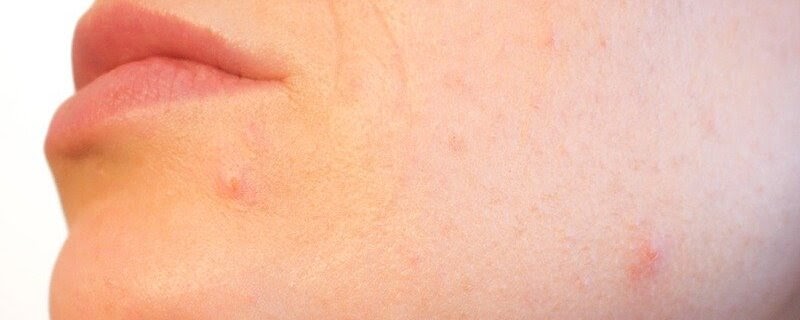
Newly formed comedones appear white, but as they are continuously exposed to air, the sebum oxidizes and turns dark or black. This is the cause of what is commonly known as “strawberry nose.”
Dark pores are not merely a cosmetic concern. Comedones that have accumulated over a long period create an environment where bacteria can thrive, increasing the risk of inflammation and acne. Furthermore, post-inflammatory hyperpigmentation left around the pores can cause the area to appear dark even after the comedones have been removed.
If you have started to notice dark pores, this is a sign that prompt action is needed. If self-care has not produced improvement, please consider professional treatment at a clinic.
Could Your Routine Be Making Things Worse? 3 Common Self-Care Pitfalls
Pore care performed incorrectly can actually make the condition worse. The following behaviors are worth reconsidering.
Squeezing Out Comedones
Pressing out comedones with your fingers or tweezers may feel satisfying in the moment, but this physically widens the pores and damages the surrounding skin. Damaged pores are more prone to inflammation, and the risk of hyperpigmentation also increases. People who habitually squeeze their pores tend to find themselves in a cycle where their pores become increasingly noticeable.
Frequent Use of Pore Strips
Peel-off pore strips remove not only comedones but also the essential skin cells along with them. While pores may appear less visible immediately after use, the skin barrier function is weakened and sebum production becomes more active — ultimately making it easier for more stubborn comedones to form.
Scrubbing Vigorously or Over-Washing
Washing with vigorous scrubbing or cleansing multiple times a day in the belief that this will remove comedones is counterproductive. Friction irritates the skin and triggers excess sebum production. The recommended approach is to wash twice daily — morning and evening — using a generous lather and gentle motions.
When you have reached the limits of self-care, please do not push through — consult with a clinic instead. Under the guidance of a specialist who can diagnose your pore type, you can work toward improvement more effectively.
Pore Treatments at Our Clinic — 5 Approaches and How to Choose
Every patient’s pores are different. Our clinic offers the following five treatments, and after assessing your pore type during the consultation, we will propose the most suitable treatment plan for you.
Dermapen Microneedling | Activating the Skin’s Natural Regenerative Power
This treatment uses ultra-fine needles — finer than a strand of hair — to create micro-channels in the skin, stimulating the skin’s natural regenerative process. As the skin renews itself, accumulated comedones are expelled and a pore-tightening effect can be expected.
The treatment also has the effect of reducing excess sebum production, making it helpful for acne prevention as well. We recommend approximately 5 sessions at 3–4 week intervals, and pores tend to become less noticeable with each successive session.
▶ Details and pricing for Dermapen Microneedling
ICON (Photofacial) | Tightening Pores with Light
This treatment uses a specialized light known as IPL to stimulate collagen production. As collagen increases, the skin regains firmness and open pores become tighter. It is particularly recommended for those concerned about pores that have opened due to aging.
Since IPL also acts on melanin, it may also help improve hyperpigmentation around the pores. Please note that treatment is not available for pregnant individuals or those with active skin inflammation — please let us know at the time of consultation.
▶ Details and pricing for ICON (Photofacial)
Chemical Peeling | Gently Removing Dead Skin Cells
A chemical solution is applied to remove dead skin cells from the surface of the skin and help normalize the skin cell turnover cycle. Since comedones trapped in pores are also removed, many patients notice a reduction in skin roughness immediately after treatment.
At our clinic, we select from multiple chemical agents — including salicylic acid, glycolic acid, and collagen peel — based on your skin type. Significant pain or bleeding is generally unlikely, and downtime is typically short.
▶ Details and pricing for Chemical Peeling
Fractional Laser | Renewing Skin from Within
This treatment uses a laser to create micro-channels in the skin, stimulating collagen production during the repair process. In addition to removing comedones from pores, it may also help restore skin firmness and elasticity.
Our clinic offers two types: an ablative type with higher efficacy, and a non-ablative type with shorter downtime, so you can choose the option that fits your lifestyle. This treatment is particularly well suited for those concerned about sagging pores or uneven skin texture.
▶ Details and pricing for Fractional Laser
Q-Switch YAG Laser | Targeted Care for Dark Pores
This laser selectively targets melanin pigment to help improve dark pores and hyperpigmentation. Irradiation may contribute to pore tightening, supporting a condition where comedones are less likely to build up.
The same device is used for treating age spots and freckles, making it a suitable option for those who wish to address both pore care and skin brightening at the same time. Downtime is minimal.
▶ Details and pricing for Q-Switch YAG Laser
Which Type Are You? Recommended Treatments by Pore Condition
Pore concerns vary from person to person. At our clinic, we classify pore conditions into four types and select the most appropriate treatment for each.
Clogged Pore Type
Appearance: White comedones visibly clogging the pores; rough texture to the touch
Main Causes: Sebum and dead skin cell accumulation, disrupted skin cell turnover
Recommended Treatment: Chemical Peeling, Dermapen Microneedling + topical agent infusion
Dark Pore Type
Appearance: Pores that appear as dark dots (“strawberry nose”)
Main Causes: Oxidized comedones, melanin deposition
Recommended Treatment: Q-Switch YAG Laser + Chemical Peeling
Open Pore Type
Appearance: Pores around the nose that appear round and open
Main Causes: Excess sebum production, genetic factors
Recommended Treatment: ICON + Dermapen Microneedling, Chemical Peeling
Sagging Pore Type
Appearance: Pores on the cheeks that have elongated into an oval shape
Main Causes: Decreased collagen due to aging
Recommended Treatment: Fractional Laser, Dermapen Microneedling
Many patients present with a combination of more than one type. During the consultation, we will conduct a detailed assessment and may also propose a combined treatment approach.
Combined Treatment Plans to Help Maximize Results
Where a single treatment has its limitations, combining multiple approaches can help achieve synergistic effects.
Comedone Removal + Skin Regeneration
Chemical Peeling → Dermapen Microneedling
Chemical peeling is performed first to remove dead skin cells and comedones, followed by Dermapen Microneedling to promote skin regeneration. This sequence allows the effects of Dermapen to penetrate more deeply, enhancing the pore-tightening result.
Pore Care + Skin Brightening in One Approach
ICON → Q-Switch YAG Laser
ICON works to tighten pores overall, while Q-Switch YAG provides focused care for dark spots. This combination is well suited for those concerned about both open pores and hyperpigmentation.
Anti-Aging Focused Combination
Fractional Laser → Topical Agent Infusion
Active skincare ingredients are infused through the micro-channels created by the fractional laser. This approach targets sagging pore improvement while also aiming to restore overall skin firmness and elasticity.
From Initial Consultation to Aftercare — The Treatment Process
STEP 1: Consultation and Assessment
We begin with a detailed examination of your current skin condition. Using a magnifying device, we assess the shape of your pores and the depth of comedones, and also ask about your lifestyle and skincare history. Based on this information, we develop a treatment plan tailored to you.
STEP 2: Treatment
After cleansing the skin, we perform the selected treatment. Topical anesthesia is available for those concerned about discomfort. Following treatment, a soothing mask and moisturizing care are applied to calm the skin.
STEP 3: Home Care Guidance
We provide specific advice on self-care practices to help maintain the results of treatment. This includes guidance on proper face-washing technique and recommended skincare ingredients for use at home.
STEP 4: Progress Check and Next Session
We review your progress approximately one month later to assess how the treatment is working. The treatment plan is adjusted as needed while working toward your skin goals.
Treatment Duration and Expected Timeline
Mild Pore Concerns
Treatment duration: 2–3 months
Total sessions: 3–5 sessions
Recommended treatment: Chemical peeling-centered program
Moderate Pore Concerns
Treatment duration: 4–6 months
Total sessions: 6–8 sessions
Recommended treatment: Combined treatment program
Severe Pore Concerns
Treatment duration: 6–12 months
Total sessions: 10–15 sessions
Recommended treatment: Intensive treatment + maintenance
Results vary among individuals, but many patients report noticing “less skin roughness” and “less visible pores” around their 3rd or 4th session.
Frequently Asked Questions About Pore Treatments
The nose is one of the areas on the face where the sebaceous glands are particularly active. Because sebum production is high, and the contoured shape of the nose makes it harder for cleansers to reach every area thoroughly, impurities tend to accumulate. Skin cell turnover is also more easily disrupted in this area, creating the ideal conditions for comedone formation.
Yes, they are different. Comedones form when sebum and dead skin cells accumulate in a pore that is not completely blocked. Acne, on the other hand, forms when the pore is fully closed and Cutibacterium acnes (C. acnes) bacteria proliferate, causing inflammation. That said, comedones that are left untreated can develop into acne. Our clinic offers treatment for both conditions.
The reason comedones appear more prominent after cleansing or bathing is that the comedones trapped in the pores absorb moisture and swell up, appearing whitish. They return to their previous state once the skin dries, but this is also a sign that comedones have been accumulating.
This varies depending on the treatment. Chemical peeling involves little to no discomfort. Dermapen Microneedling and laser treatments may produce a mild stinging sensation, but this can be significantly reduced with topical anesthesia. If you are concerned about discomfort, please let us know at the time of your consultation.
Makeup is generally permitted from the same day following chemical peeling. After Dermapen Microneedling or laser treatments, you may be asked to wait approximately 24 hours to a few days depending on the specific procedure. We will provide detailed guidance at the time of your treatment.
Tips for Maintaining Treatment Results at Home
Daily home care is also important for making the most of your clinic treatments and helping to sustain the results over time.
3 Essentials for Your Daily Skincare Routine
1. Cleanse gently with a rich lather
Work your cleanser into a generous foam and wash using the lather rather than direct contact between hands and skin. Rinse with lukewarm water at around 32–34°C to avoid stripping away too much sebum.
2. Do not skimp on moisturizing
Always follow toner with a lotion or cream to lock in moisture. Dryness is one of the main contributors to pore concerns.
3. Sunscreen is essential year-round
UV exposure breaks down collagen and can worsen pore enlargement. Make sunscreen a daily habit — even on cloudy days or when staying indoors.
Skincare Ingredients That May Help with Pore Care
When choosing skincare products, look for formulations that contain the following ingredients.
Vitamin C derivatives: Help regulate sebum production and support pore tightening
Retinol: Promotes skin cell turnover and may help prevent comedone buildup
Niacinamide: Helps balance sebum levels and may reduce the appearance of pores
Risks and Side Effects
To help you feel confident about undergoing treatment, we explain the potential side effects below.
Common Reactions (approximately 1–3 days)
Mild redness, warmth, and a feeling of dryness are normal reactions. In most cases, these settle naturally within a few days.
Rare Symptoms
Temporary hyperpigmentation may occasionally occur, but this typically improves over time. If symptoms persist, additional brightening treatment is available.
Those Who Are Not Suitable for Treatment
Treatment may not be available for those in the following situations.
- Those who are pregnant or breastfeeding
- Those with active skin conditions at the treatment site
- Those with a tendency to develop keloids
- Those currently taking immunosuppressants
If you have any existing medical conditions or are taking any medications, please be sure to inform us at the time of your consultation.
For Clogged Pores and Comedone Removal, Visit IC Clinic Shinjuku
Clogged pores can improve with appropriate treatment. Even if self-care has not produced the results you were hoping for, there is no need to give up.
At our clinic, we carefully assess your pore condition and propose an optimal plan from five treatment options: Dermapen Microneedling, ICON, Chemical Peeling, Fractional Laser, and Q-Switch YAG Laser.
If you are unsure which treatment is right for you, we encourage you to come in for a consultation. Let us work together to address your pore concerns.