
This page was supervised by a specialist at IC Clinic Shinjuku, located just a 3-minute walk from JR Shinjuku Station.

Looking for Hyperhidrosis Treatment in Shinjuku? | Our Specialists Will Recommend the Right Treatment for Your Symptoms
“Documents get soaked during meetings.” “I’m afraid to shake hands.” “Sweat stains on my clothes keep me from being around people.” — Many patients visit our clinic with exactly these concerns.
Hyperhidrosis is a condition that can be improved with appropriate treatment. Drawing on our extensive experience performing hyperhidrosis treatments each year, we work with each patient to propose a treatment plan tailored to their individual symptoms and lifestyle.
On this page, our specialists provide a detailed explanation to help those troubled by hyperhidrosis find a treatment approach that suits them.
Which Type of Sweating Concerns You? | Hyperhidrosis Self-Check
For those wondering whether they may have hyperhidrosis, here is a simple self-check. If two or more of the following apply to you, there is a possibility you have hyperhidrosis.
- Your palms or soles of your feet are always moist, even when it is not particularly hot
- When you feel nervous, you sweat so much under your arms that it soaks through your clothing
- Sweating makes it difficult to operate your smartphone or keyboard
- At least once a week, sweating interferes with your daily activities
- Your symptoms began before the age of 25
- A family member has similar symptoms
At our clinic, in addition to this type of consultation at your first visit, we objectively assess sweat volume and propose the most suitable treatment plan. Please do not dismiss it as “just sweating” — feel free to come in for a consultation.
Explained by Our Specialists | Types of Hyperhidrosis and How to Identify Them
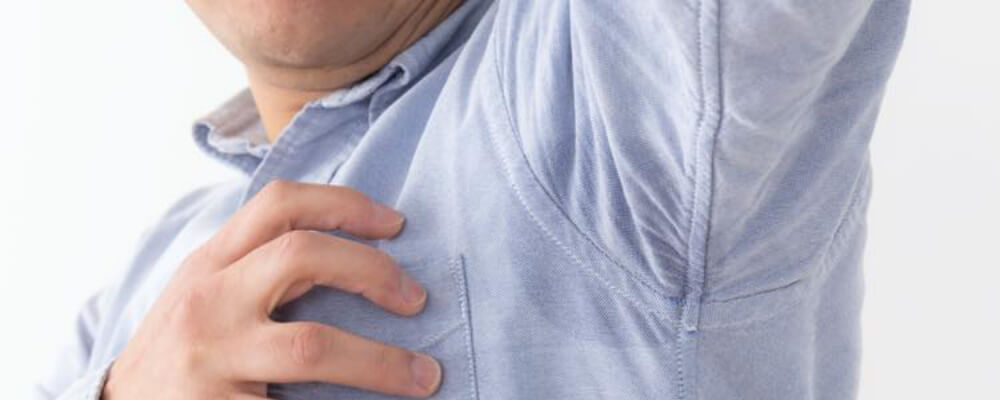
Hyperhidrosis is broadly divided into two types based on the areas affected, and the treatment approach differs for each. Knowing which type applies to you is the first step toward effective treatment.
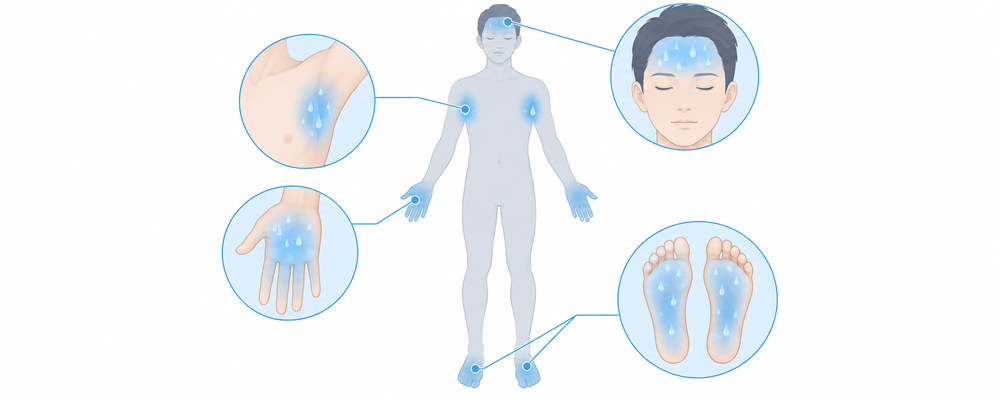
Focal Hyperhidrosis | Excessive Sweating Concentrated in Specific Areas
Focal hyperhidrosis is characterized by excessive sweating in specific areas of the body, such as the underarms, palms, soles of the feet, face, and scalp. Approximately 80% of patients who visit our clinic fall into this category.
It is classified as follows according to the area of sweating.
| Condition | Area Affected | Common Concerns Reported by Patients |
|---|---|---|
| Axillary hyperhidrosis | Underarms | Sweat stains on clothing, worry about odor |
| Palmar hyperhidrosis | Palms | Difficulty with paperwork, handshakes, and smartphone use |
| Plantar hyperhidrosis | Soles of the feet | Dampness inside shoes, concurrent athlete’s foot |
| Facial / craniofacial hyperhidrosis | Face and scalp | Makeup wearing off, anxiety in social situations |
Focal hyperhidrosis tends to worsen with emotional tension and stress. This is because the sympathetic nervous system controls sweating, making it easy to fall into a cycle where consciously trying not to sweat actually causes more sweating.
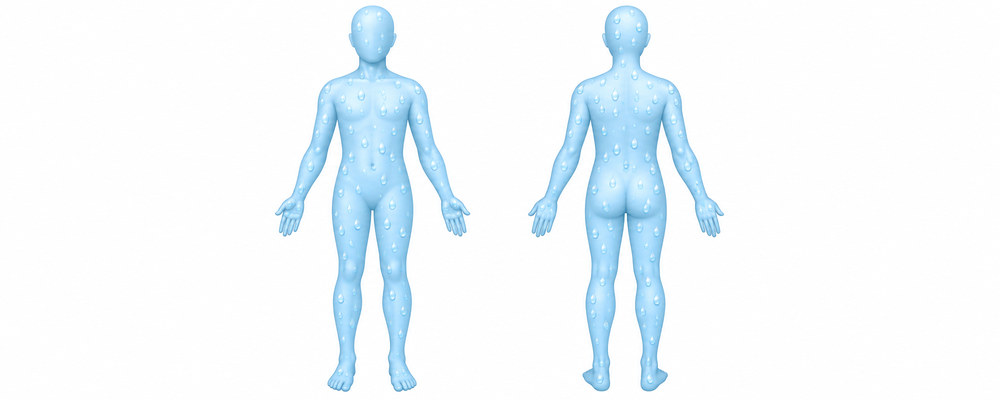
Generalized Hyperhidrosis | Excessive Sweating Over the Entire Body
Generalized hyperhidrosis involves excessive sweating across the entire body. Unlike the focal type, it is not uncommon for an underlying medical condition to be the cause.
Possible contributing factors for generalized hyperhidrosis are as follows.
| Category of Factor | Examples |
|---|---|
| Endocrine / metabolic conditions | Hyperthyroidism, diabetes, menopausal disorder |
| Neurological conditions | Parkinson’s disease, spinal cord injury |
| Infectious diseases | Tuberculosis, HIV infection |
| Medication-induced | Antidepressants, antipyretic analgesics, corticosteroids |
| Primary | No identifiable underlying condition |
In cases of generalized hyperhidrosis, treating the underlying condition takes priority. Our clinic also provides referrals to internal medicine and other departments as needed, with the aim of addressing the root cause.
Hyperhidrosis and Underarm Odor (Axillary Osmidrosis) Are Different Conditions | Clarifying Points of Confusion
“Excessive sweating” and “noticeable odor” are symptoms that patients themselves often confuse. However, hyperhidrosis and axillary osmidrosis are separate conditions caused by different sweat glands, and their treatment approaches differ accordingly.
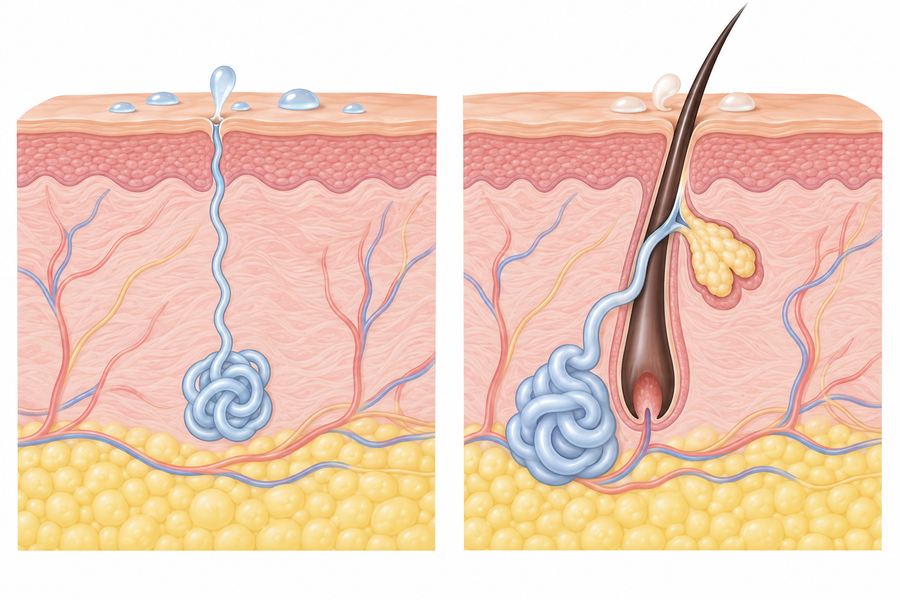
| Hyperhidrosis | Underarm Odor (Axillary Osmidrosis) | |
|---|---|---|
| Sweat gland involved | Eccrine glands | Apocrine glands |
| Characteristics of sweat | Colorless, watery, approximately 99% water | Milky white, slightly viscous |
| Odor | Sweat itself has no odor | Produces a distinctive, strong odor |
| Areas affected | Whole body (particularly hands, feet, and underarms) | Limited areas such as underarms and genitals |
Sweat from eccrine glands is naturally odorless, but it can produce an unpleasant smell when it mixes with bacteria on the skin’s surface. Sweat from apocrine glands, on the other hand, contains fatty acids and ammonia, which are broken down by bacteria to create the distinctive strong odor associated with axillary osmidrosis.
Hyperhidrosis and axillary osmidrosis can occur together. The miraDry treatment, which is popular at our clinic, is able to address both types of sweat glands, making it a particularly suitable option for those troubled by both excessive sweating and odor.
Hyperhidrosis Treatments Available at Our Clinic | A Thorough Comparison of 7 Options
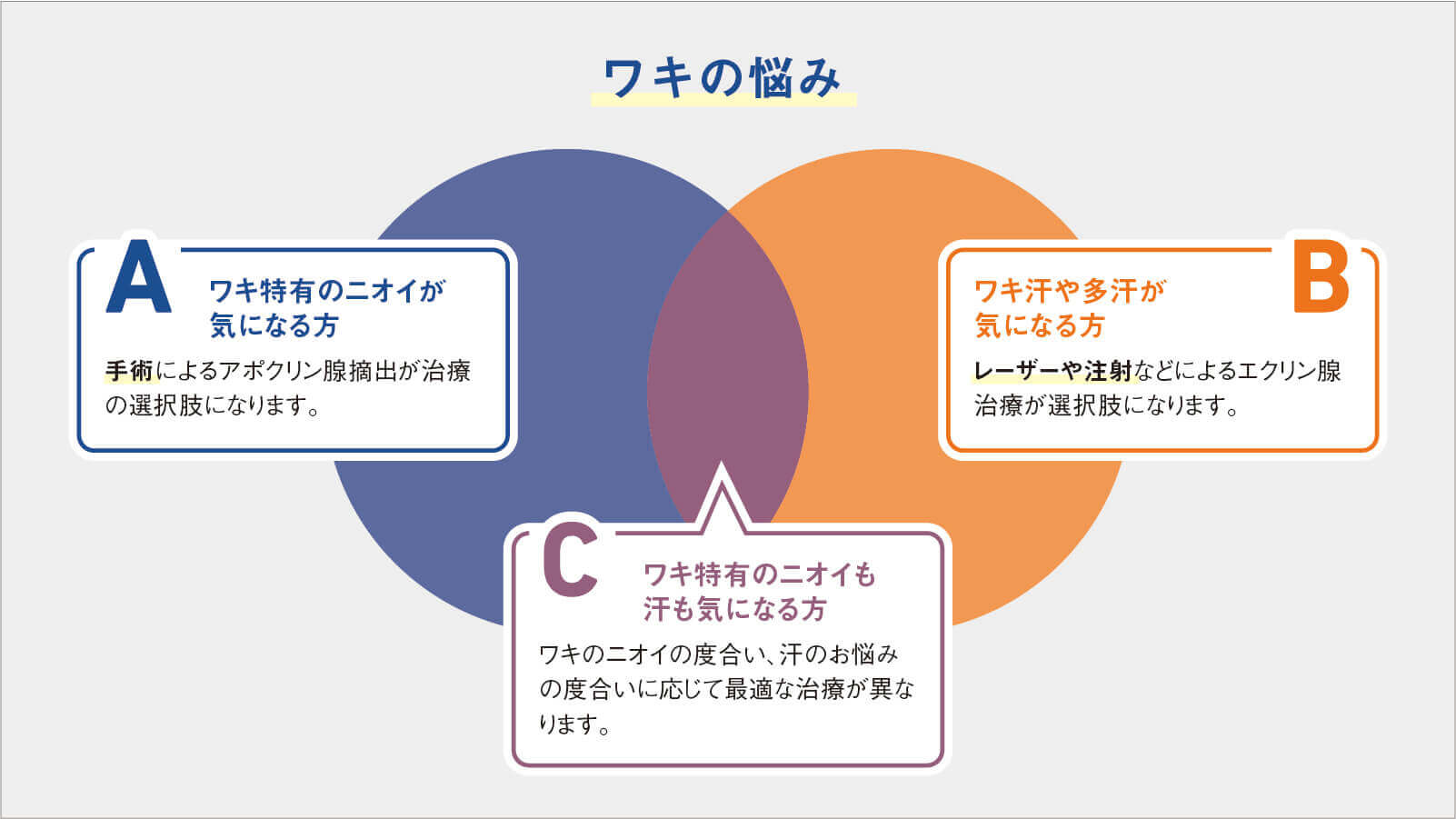
There are several treatment options for hyperhidrosis, and the most suitable choice varies depending on the severity of symptoms, the area affected, your lifestyle, and your budget. Our clinic offers the treatments listed below, and we work together with each patient to develop an individualized treatment plan.
A Guide to Choosing a Treatment Based on Symptom Severity
Here is a general overview of treatment options organized by symptom severity.
| Symptom Level | Impact on Daily Life | Recommended Treatment |
|---|---|---|
| Mild | Occasionally bothersome | Topical medication (aluminum chloride) |
| Moderate | Causes difficulties several times a week | Topical medication + oral medication, or botulinum toxin injections |
| Severe (underarms) | Daily interference with significantly reduced quality of life | miraDry, or endoscopic thoracic sympathectomy |
| Severe (hands / feet) | Daily interference with significantly reduced quality of life | Iontophoresis, botulinum toxin injections, endoscopic thoracic sympathectomy |
Topical Medication | An Accessible First Step
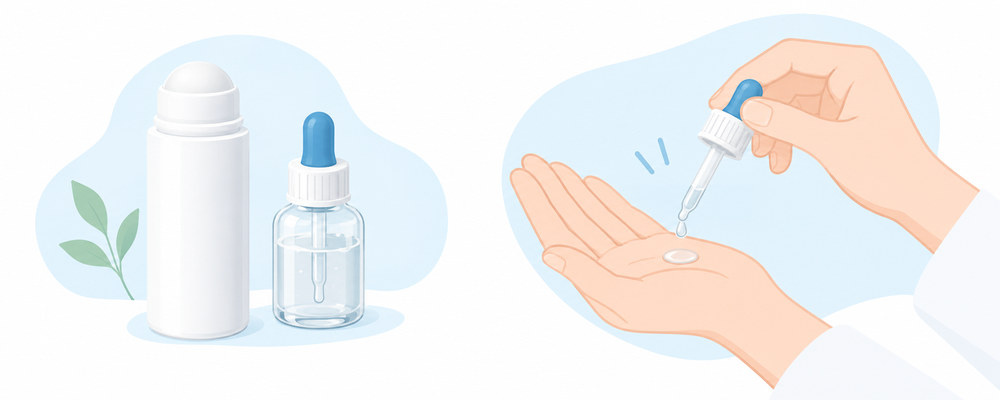
Applying an aluminum chloride solution to the affected area temporarily blocks the openings of the sweat glands, suppressing perspiration. As an introductory option for hyperhidrosis treatment, many patients at our clinic try this approach first.
| Item | Details |
|---|---|
| Applicable areas | Underarms, palms, soles of the feet |
| Onset of effect | Noticeable after 2–3 weeks of continued use |
| Duration | Only while continuing use |
| Estimated cost | ¥1,500–¥2,000 per prescription (tax-included: ¥1,650–¥2,200) *Not covered by insurance |
| Benefits | Low cost, can be used in combination with other treatments |
| Notes | Itching or irritation at the application site may occur |
Once you begin to notice an effect, it is also possible to reduce application frequency to 2–3 times per week for maintenance. However, since symptoms return upon discontinuation, we recommend other treatment options for those seeking a more fundamental solution.
Oral Medication | Controlling Perspiration from Within

Anticholinergic medications work by blocking the nerve signals that control sweating, thereby reducing perspiration. This is an option for cases where topical medication alone provides insufficient results.
The main oral medications prescribed at our clinic are as follows.
- Propantheline bromide (Pro-Banthine): covered by insurance
- Oxybutynin: not covered by insurance
- Solifenacin succinate: not covered by insurance
| Item | Details |
|---|---|
| Estimated cost | From ¥2,000 per month (tax-included: from ¥2,200) |
| Benefits | Convenient — simply take as prescribed; effective throughout the body |
| Notes | Possible side effects include dry mouth, drowsiness, and constipation |
Dry mouth is a commonly reported side effect, so our clinic carefully reviews each patient’s constitution and lifestyle before prescribing an appropriate medication.
Herbal (Kampo) Medicine | A Gentle Approach Aimed at Constitutional Improvement
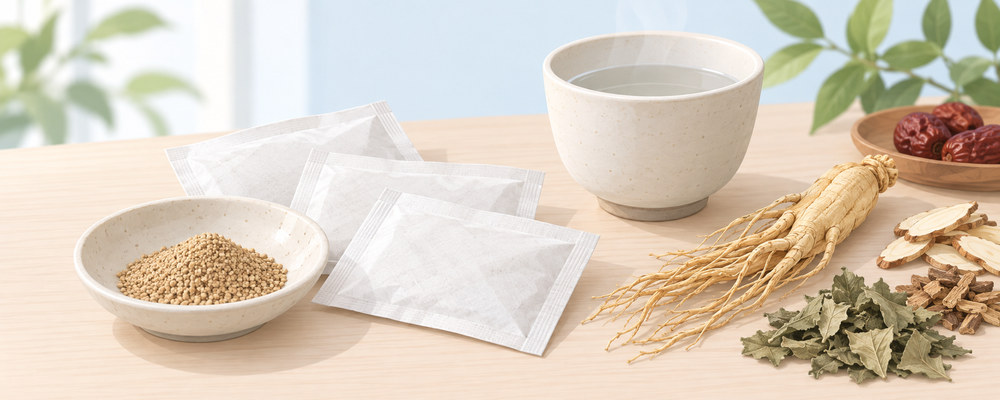
Kampo medicine takes a different approach from Western medicine, aiming to rebalance the body’s constitution as a whole. Its effects are gradual, but it has fewer side effects and is well suited to long-term constitutional improvement.
Representative Kampo formulas used for hyperhidrosis include the following.
- Boiogito: for those who tend toward water retention and perspire easily
- Hochu-ekki-to: for those who tire easily and have reduced stamina
- Keishi-ka-ogi-to: for those with a delicate constitution who tend to sweat during sleep
The estimated cost is from ¥5,000 per month (tax-included: from ¥5,500). Because compatibility with an individual’s constitution is important with Kampo medicine, we will review the prescription if sufficient effects are not observed.
Botulinum Toxin Injections | For Those Seeking a Reliable Effect

Botulinum toxin is injected into the affected area to temporarily block nerve signals to the sweat glands, thereby suppressing perspiration. We use formulations approved by the Ministry of Health, Labour and Welfare, and this is a treatment with an established safety and efficacy profile.
| Item | Details |
|---|---|
| Applicable areas | Underarms, palms, soles of the feet, face |
| Onset of effect | Noticeable within 2–3 days of injection |
| Duration | 4–9 months (individual results vary) |
| Treatment time | Approximately 15–30 minutes |
| Estimated cost | ¥20,000–¥50,000 per session (tax-included: ¥22,000–¥55,000) |
| Insurance coverage | Covered only for severe axillary hyperhidrosis |
Since a single treatment session can maintain its effect for several months, this option is also suitable for those who wish to receive treatment only before important events or during summer. Please see our hyperhidrosis price list for detailed pricing at our clinic.
Iontophoresis | A Treatment Specialized for Hyperhidrosis of the Hands and Feet
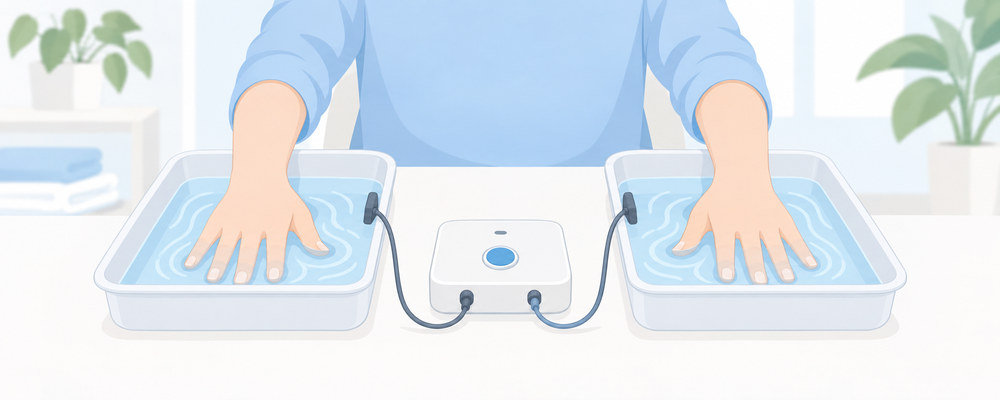
This treatment involves immersing the hands or feet in water-filled trays through which a weak electrical current is passed, temporarily suppressing sweat gland function. It is one of the few treatments covered by insurance for palmar and plantar hyperhidrosis.
| Item | Details |
|---|---|
| Applicable areas | Palms, soles of the feet |
| Time per session | Approximately 30 minutes |
| Number of sessions required | Initial treatment: 1–2 times per week × 8–12 sessions; maintenance: approximately once a week |
| Estimated cost | Approximately ¥900 per session (tax-included: approximately ¥990) *Covered by insurance |
| Benefits | Insurance coverage reduces the financial burden |
| Notes | Regular clinic visits required; not applicable to underarms |
There is minimal discomfort — most patients experience only a mild tingling sensation. Redness or itching of the skin may occasionally occur, but this is generally temporary.
Endoscopic Thoracic Sympathectomy | Addressing Palmar Hyperhidrosis at Its Source
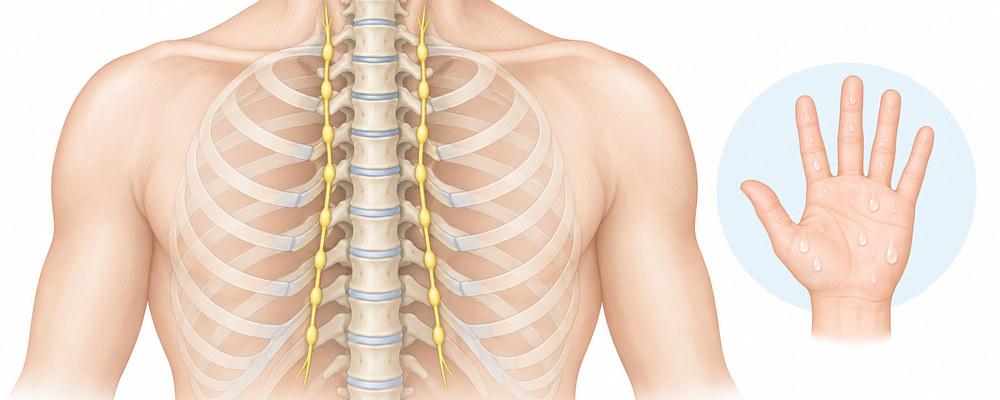
This surgical procedure uses a thoracoscope to sever the sympathetic nerves that control sweating. It is expected to produce results in a high proportion of cases of palmar hyperhidrosis and is considered a final-resort option for those who have long suffered from severe palmar hyperhidrosis.
| Item | Details |
|---|---|
| Applicable areas | Primarily the palms (palmar hyperhidrosis) |
| Surgery time | Approximately 20 minutes per side |
| Scarring | Approximately 2–3 mm; barely noticeable |
| Estimated cost | ¥120,000–¥150,000 (tax-included: ¥132,000–¥165,000) *Covered by insurance |
| Effect | Expected to be highly effective for the palms |
Regarding Compensatory Sweating
After endoscopic thoracic sympathectomy, some patients experience “compensatory sweating,” in which sweating increases in areas such as the chest, back, or buttocks. The incidence rate varies across reports, but it is observed in many patients to varying degrees.
At our clinic, we take care to fully explain the risk of compensatory sweating before surgery and carefully assess the appropriateness of the procedure while taking into account each patient’s lifestyle and the severity of their concerns.
miraDry | The Most Chosen Underarm Hyperhidrosis Treatment at Our Clinic
miraDry is a treatment that uses microwave (electromagnetic wave) energy to destroy sweat glands. It requires no incisions and leaves no scarring, and because its effects are expected to last long-term with just 1–2 treatment sessions, it is the treatment most frequently chosen by patients at our clinic.
| Item | Details |
|---|---|
| Applicable areas | Underarms only |
| Treatment time | Approximately 60 minutes for both underarms |
| Onset of effect | Noticeable immediately after the procedure |
| Duration | Long-lasting (destroyed sweat glands do not regenerate) |
| Downtime | Swelling and redness lasting approximately 1–2 weeks |
| Estimated cost | ¥200,000–¥400,000 (tax-included: ¥220,000–¥440,000) *Not covered by insurance |
A key feature of miraDry is its ability to address both the eccrine glands, which cause excessive sweating, and the apocrine glands, which cause odor. It is a particularly well-suited treatment option for those who wish to address both hyperhidrosis and axillary osmidrosis at the same time.
Please see our underarm odor & axillary hyperhidrosis price list for detailed pricing.
The miraDry Treatment Process | A Detailed Look at How It Works
Here we provide a more detailed explanation of the miraDry mechanism, a treatment chosen by many patients at our clinic.
STEP 1 | Precisely Targeting Two Types of Sweat Glands
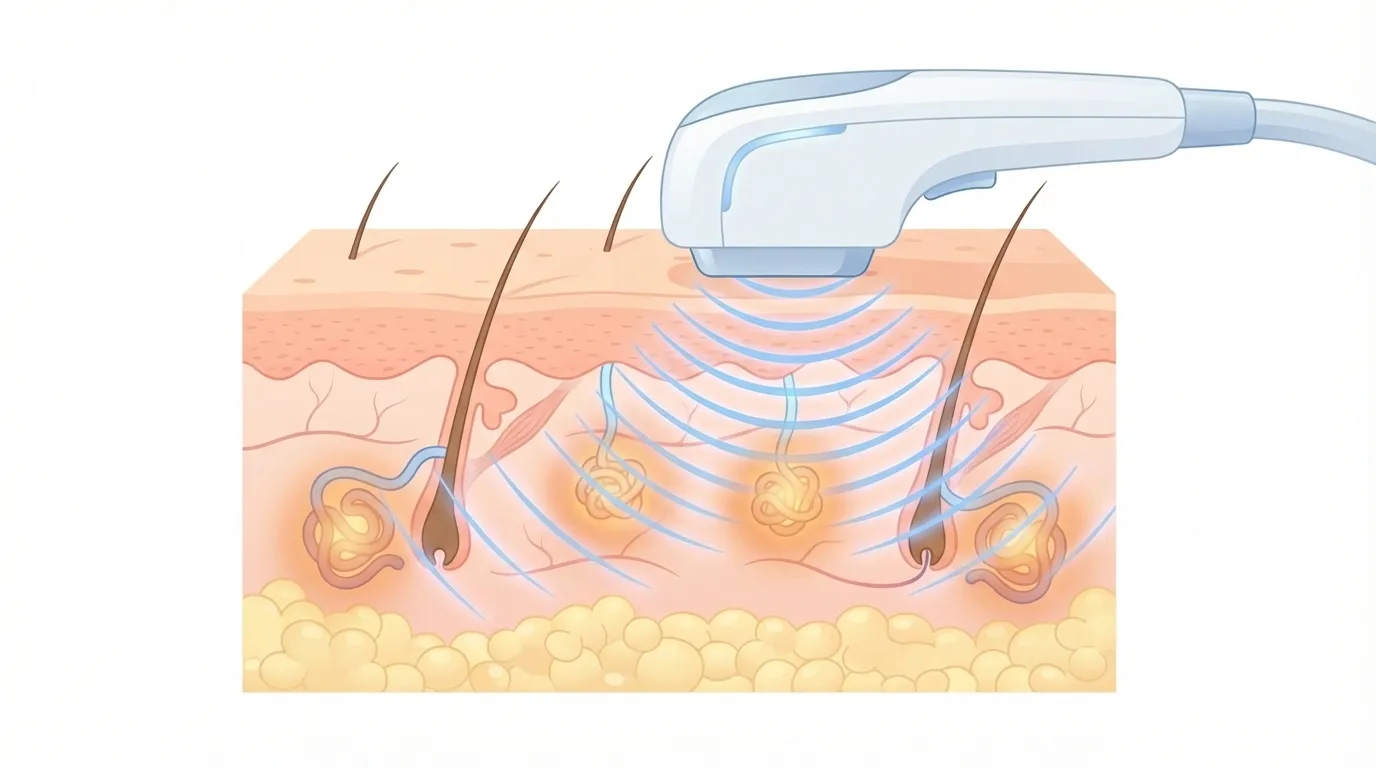
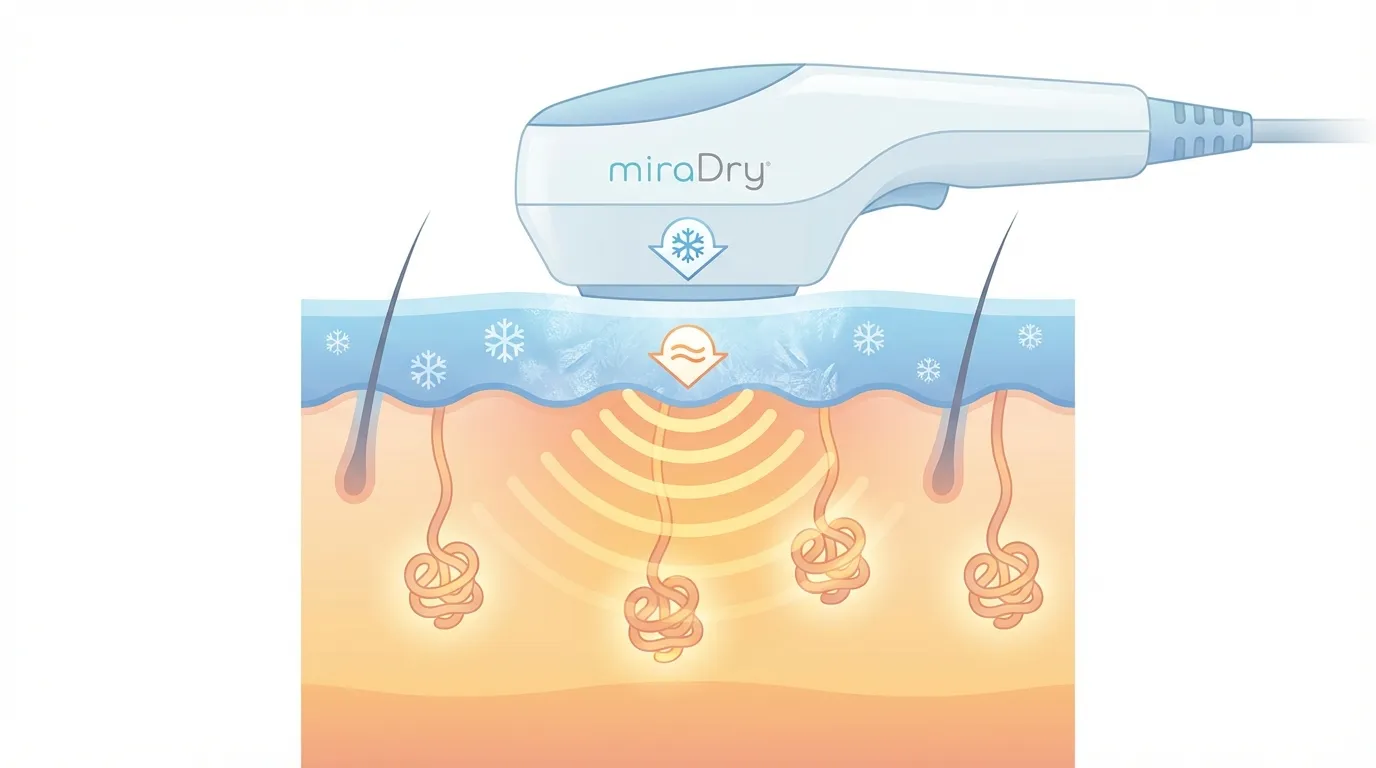
The microwaves emitted by miraDry have the property of being readily absorbed by water. Because sweat glands contain a high water content, the microwave energy concentrates efficiently on the glands.
- Eccrine glands: the sweat glands associated with hyperhidrosis. Located in the shallow layer between the dermis and subcutaneous tissue
- Apocrine glands: the sweat glands associated with axillary osmidrosis. Located slightly deeper within the subcutaneous tissue
STEP 2 | Destroying Sweat Glands with Thermal Energy
When microwaves are absorbed by the sweat glands, they are converted into thermal energy, causing the gland tissue to undergo heat-induced degeneration. This action permanently eliminates the function of the sweat glands.
Importantly, this thermal energy acts only on the sweat glands and does not damage surrounding muscles, nerves, or blood vessels.
STEP 3 | Ensuring Safety with a Proprietary Cooling System
miraDry is equipped with a cooling system called “hydroCeramic cooling.” By simultaneously cooling the skin surface during microwave irradiation, it minimizes damage to the epidermis and reduces the risk of discomfort and burns.
5 Reasons Patients Choose miraDry

Here is a summary of why miraDry is supported by so many patients at our clinic.
- No scarring: No incisions are required, making it a reassuring option for those concerned about appearance
- Treats both hyperhidrosis and axillary osmidrosis simultaneously: Addresses both types of sweat glands at once
- Long-lasting effects: Because destroyed sweat glands do not regenerate, repeated treatments are not necessary
- Relatively short downtime: Most patients are able to return to daily activities the following day
- Short treatment time: Approximately 60 minutes for both underarms; typically only 1–2 clinic visits required
“I feel freed from years of worry.” “I wish I had come sooner.” — We often hear feedback like this from our patients.
View IC Clinic’s miraDry pricing now
Self-Care Tips for Hyperhidrosis | Advice from Our Specialists
Alongside treatment at a medical institution, daily self-care can also be helpful in managing perspiration. Here we introduce practical advice that our specialists share with patients.
Limit Foods That Stimulate the Sympathetic Nervous System

Caffeine, spicy foods, and alcohol activate the sympathetic nervous system and promote sweating. There is no need to avoid them entirely, but we recommend moderating intake the day before an important engagement.
The nicotine in tobacco also stimulates sweat glands, so those who smoke may find that cutting back or quitting can contribute to improvement of their symptoms.
Adopt Lifestyle Habits That Support a Balanced Autonomic Nervous System

Hyperhidrosis tends to worsen with emotional stress. The following habits can help balance the autonomic nervous system and reduce excessive sweating.
- Get adequate sleep (7–8 hours)
- Refresh your body and mind with moderate exercise
- Set aside time to relax through deep breathing or meditation
- Take long, leisurely baths in lukewarm water
Being overly conscious of not sweating can itself become a source of stress and may actually promote sweating. Developing a mindset that allows you to manage your symptoms with ease is also important.
Make Post-Sweating Care a Regular Habit
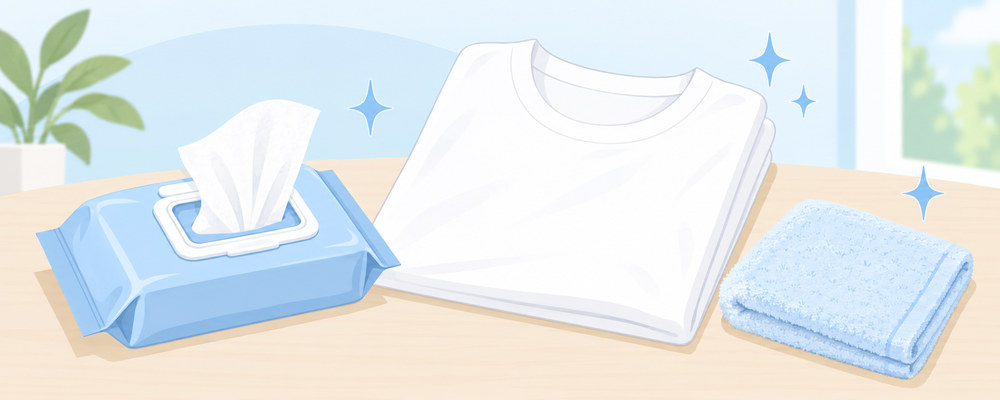
Even though sweat itself has no odor, bacteria can multiply over time and cause unpleasant smells. The following measures can help reduce discomfort.
- Use cleansing wipes to freshen up regularly
- Carry a change of underwear or shirt
- Choose clothing made from breathable fabrics
- Make use of antiperspirant and deodorant products
Frequently Asked Questions from Our Patients
“Heavy sweater” is a general term referring to someone who tends to perspire easily due to their constitution. “Hyperhidrosis,” on the other hand, is a medical diagnosis referring to a condition in which sweating far exceeds what is necessary for body temperature regulation and interferes with daily life.
Specifically, if sweating causes problems at least once a week, there is a possibility of hyperhidrosis.
At our clinic, we assess whether treatment for hyperhidrosis is needed based on a medical interview and physical examination.
Some hyperhidrosis treatments are covered by health insurance.
【Treatments covered by insurance】
・ Botulinum toxin injections for severe axillary hyperhidrosis
・ Iontophoresis for palmar and plantar hyperhidrosis
・ Propantheline bromide (oral medication)
・ Endoscopic thoracic sympathectomy
【Treatments not covered by insurance】
・ miraDry
・ Aluminum chloride topical medication
Our clinic offers options from both insurance-covered and self-pay treatments, tailored to each patient’s preferences and budget.
Hyperhidrosis treatment is primarily provided by the following departments.
1. Dermatology / plastic surgery: topical medication, oral medication, botulinum toxin injections, etc.
2. Cosmetic surgery: advanced treatments such as miraDry
3. Psychosomatic medicine: counseling for cases involving strong psychological sweating
4. Thoracic surgery: endoscopic thoracic sympathectomy
Our clinic specializes in plastic and cosmetic surgery and offers a wide range of treatment options covering mild to severe cases. If you are unsure which treatment is right for you, please feel free to come in for a consultation.
Yes, hyperhidrosis in children can be treated. In pediatric patients, symptoms may appear as early as around age 3 or 4, and can lead to difficulties at school such as “test papers getting wet with sweat” or “not wanting to hold hands during physical education.”
For children, treatment typically begins with methods that place minimal physical burden on the body, such as topical medication or iontophoresis. Botulinum toxin injections and miraDry are considered on a case-by-case basis, taking into account the severity of symptoms and the child’s age.
Parents concerned about their child’s symptoms are welcome to come in for a consultation.
Because sweat glands destroyed by miraDry do not regenerate, the effects are long-lasting.
Clinical data have confirmed that a single treatment session reduces sweat volume by an average of approximately 82%, and that this effect is maintained over the long term. Many patients experience satisfactory results after a single session; however, a second treatment may be recommended for those seeking even greater improvement.
Please note that not all sweat glands are destroyed, so the minimal sweating function necessary for body temperature regulation is preserved.
While there are reports suggesting that hyperhidrosis symptoms may diminish with age, spontaneous complete resolution is rare.
Symptoms typically peak in one’s teens to thirties, and some patients do experience improvement after their forties; however, many others continue to be troubled by symptoms for years.
Hyperhidrosis is not something you simply have to accept as an unchangeable part of your constitution. It is a condition whose symptoms can be managed with appropriate treatment, so we encourage anyone affected to seek a consultation sooner rather than later.
Yes, hyperhidrosis and axillary osmidrosis can occur together.
Hyperhidrosis involves the eccrine glands and axillary osmidrosis involves the apocrine glands — they are separate conditions with different causes — but when both sets of glands are highly active, the result is a high volume of sweat accompanied by noticeable odor.
For patients troubled by both hyperhidrosis and axillary osmidrosis, miraDry treatment, which addresses both types of sweat glands, is a particularly suitable option. Both sweating and odor concerns can be addressed in a single treatment session.
Please be assured that treatments such as miraDry and botulinum toxin injections target only the sweat glands in the treated area, so overall perspiration function throughout the body is not lost.
The human body has approximately 2 to 4 million eccrine glands, and treating only the underarms accounts for a very small fraction of the total. Sweating needed for body temperature regulation is adequately performed by other areas of the body, so there are no health concerns.
Additionally, miraDry does not destroy all sweat glands, so a degree of perspiration in the treated area remains.
For Hyperhidrosis Treatment in Shinjuku | Please Consult IC Clinic Shinjuku
“Sweating is keeping me from enjoying life.” — This is a concern shared by many patients who visit us. We frequently hear from patients who say, “I wish I had come to see you sooner.”
At IC Clinic Shinjuku, drawing on our extensive experience in hyperhidrosis treatment, we propose an optimal treatment plan tailored to each patient’s individual symptoms, lifestyle, and budget.
Our clinic’s strengths include the following.
- Conveniently located just a 3-minute walk from JR Shinjuku Station
- A wide range of treatment options spanning both insurance-covered and self-pay treatments
- Extensive clinical experience with miraDry
- Thorough, attentive consultations with our specialists
We provide full transparency regarding treatment content, costs, and risks. Whether you are wondering “Is my sweating at a level that requires treatment?” or “Which treatment would suit me best?” — please feel free to reach out to us with any questions.
Please see our underarm odor & axillary hyperhidrosis price list for detailed pricing on underarm odor and axillary hyperhidrosis treatments at our clinic.