
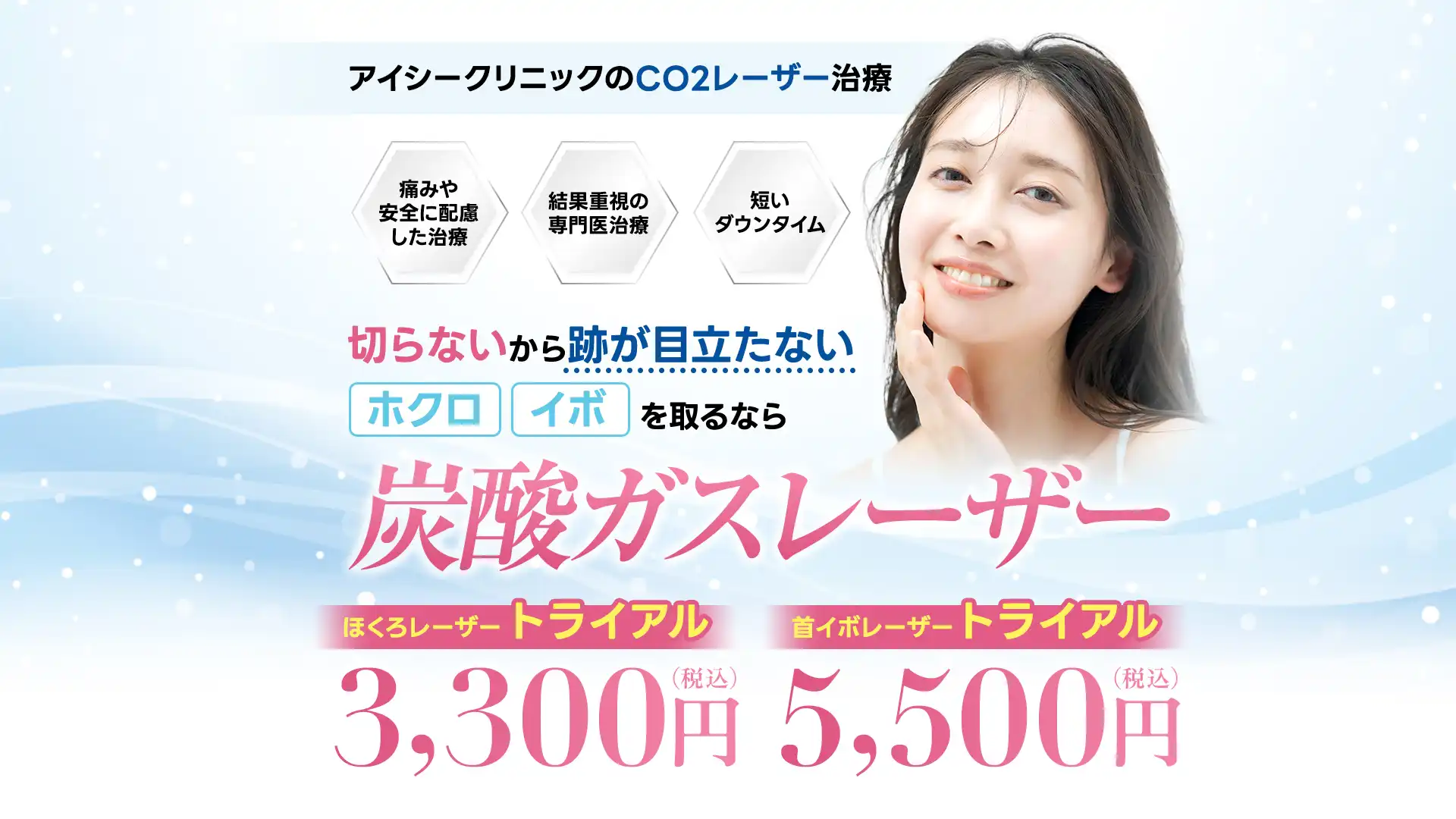
CO2 laser treatment is a procedure that can remove moles, warts, and raised pigmented spots in a short time. By utilizing the laser’s characteristic of reacting to water content, only the affected tissue is vaporized in a targeted manner, minimizing damage to the healthy surrounding skin.
However, it is not suitable for every condition — depending on the depth and size of a mole, surgical excision may be the more appropriate option. This page provides a detailed explanation of the benefits and drawbacks of CO2 laser treatment, who it is and is not suited for, and how it differs from other treatment methods.
At our clinic, we carefully examine each patient’s condition and propose the most suitable treatment plan. Please feel free to come in for a consultation.
How CO2 Laser Works | Why It Can Remove Moles and Warts
CO2 laser treatment uses an infrared laser with a wavelength of 10,600 nm. This wavelength has the characteristic of being highly absorbed by water.
Human skin contains approximately 60–70% water. When the CO2 laser is applied, the water within the skin cells absorbs the energy and vaporizes almost instantaneously, causing only the tissue of the affected area to be ablated. This mechanism allows the tissue of moles and warts to be removed in a targeted manner.
At the same time, the thermal coagulation effect of the laser causes the surrounding blood vessels to seal almost immediately, meaning bleeding is minimal in most cases. Compared to surgical excision with a scalpel, recovery tends to be faster and scarring is less likely to occur.
Conditions and Indications Treatable with CO2 Laser
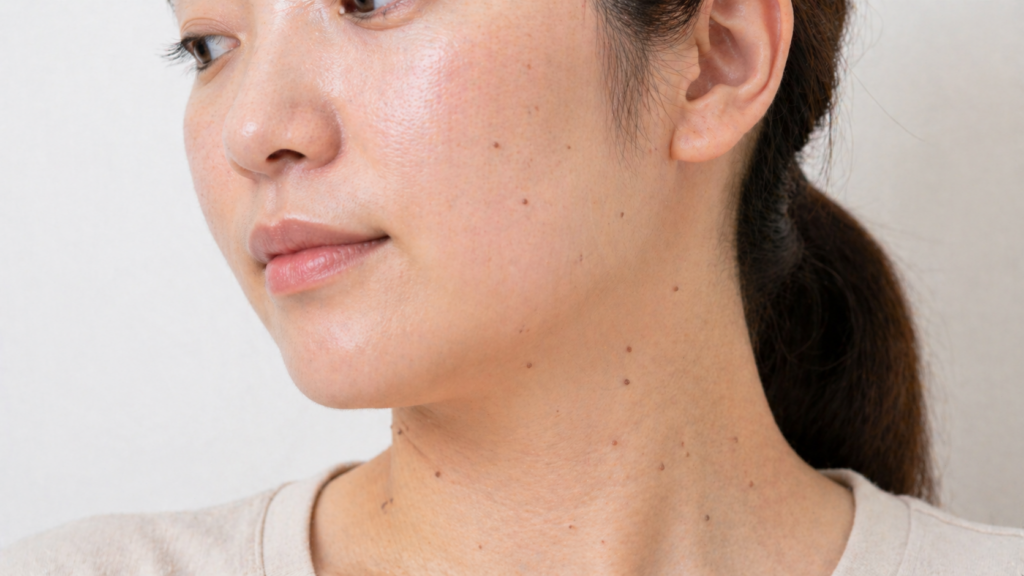
CO2 laser treatment can be effective for the following types of raised skin lesions.
Moles (Pigmented Nevi)
Moles are clusters of melanin-producing cells (nevus cells) in the skin. CO2 laser treatment is well suited for small moles with a diameter of 5 mm or less, as well as those with a flat or slightly raised surface.
However, deeply rooted moles may not be fully removed in a single session, and there is a risk of recurrence. For larger moles exceeding 5 mm or those with deep roots, surgical excision may be more appropriate — we will propose the most suitable treatment option during your consultation.
Seborrheic Keratosis (Senile Warts)
Seborrheic keratosis is a benign skin growth that can begin appearing in one’s thirties. It tends to increase with age and is a form of skin aging seen in almost everyone by their eighties.
It appears as rough, raised, brownish-to-black lesions resembling pigmented spots, and is also known as senile warts. As it is not viral, there is no risk of transmission to others. In many cases, improvement can be expected in a single treatment session using CO2 laser ablation.
Acrochordons (Soft Fibromas / Skin Tags)
These are small protruding skin growths that tend to develop in areas subject to friction, such as the neck, underarms, and décolletage. They are caused by skin aging and friction, and tend to increase from one’s thirties onward.
Most are small, measuring around 1–3 mm, and can be efficiently removed with CO2 laser treatment. Multiple lesions can be treated in a single session.
Verruca Vulgaris (Common Warts)
These warts are caused by HPV (human papillomavirus). They tend to develop on the fingers and the soles of the feet, and are characterized by a rough surface texture. They can be transmitted to others or to other areas of the body through contact.
CO2 laser treatment can be used for removal, but as recurrence may occur if the virus remains, follow-up monitoring is important.
An Honest Overview of the Benefits and Drawbacks of CO2 Laser Treatment

While CO2 laser treatment offers many benefits, it is not a universal solution. When considering treatment, it is important to make an informed decision with a clear understanding of the drawbacks and risks as well.
Benefits
① Treatment is completed in a short time
Each session takes approximately 5 to 10 minutes per lesion. Local anesthesia is administered, so discomfort is minimal and bleeding is generally minimal as well. Multiple moles or warts can be treated in a single visit, making it a convenient option for those with busy schedules.
② Scarring is less likely to be noticeable
Unlike surgical excision, suturing is not required. Because damage to the healthy skin surrounding the treated area is minimal, scarring tends to be less noticeable after healing. This treatment is particularly favored by those who wish to avoid linear scars when removing moles on the face.
③ Relatively short recovery period
After treatment, the area is protected with a tape dressing, but restrictions on daily activities are minimal — showering and washing the face are generally possible from the following day. The scab naturally sheds within approximately 10 days to 2 weeks, after which the skin gradually regenerates.
Drawbacks and Risks
① Possibility of recurrence
If a mole or wart has deep roots, a single session may not fully remove it, and recurrence is possible. Raised moles in particular often have a cone-shaped structure where the cells extend deeper into the skin. If recurrence occurs, retreatment is performed with an interval of at least 3 months.
② Post-inflammatory hyperpigmentation or redness may occur
After treatment, the treated area may temporarily become red, followed by brownish post-inflammatory hyperpigmentation. This typically fades gradually over 3 to 6 months, but may persist longer if the area is exposed to UV radiation. Sun protection following treatment is essential.
③ Risk of indentation
If the tissue is ablated too deeply, or if a deeply rooted lesion is treated aggressively in a single session, an indentation may remain in the treated area. For this reason, at our clinic, we treat at an appropriate depth to minimize scarring, and divide treatment into multiple sessions when necessary.
④ Histopathological examination is not possible
Because CO2 laser treatment ablates the tissue, the removed material cannot be sent for histopathological examination. If malignancy is suspected, we may recommend surgical excision, which allows tissue to be collected for analysis.
⑤ Not covered by health insurance (when performed for cosmetic purposes)
Treatment performed for cosmetic improvement is not covered by health insurance and is considered a private-pay (out-of-pocket) treatment.
CO2 Laser vs. Other Treatment Methods | Which Should You Choose?

There are several treatment options available for mole and wart removal beyond CO2 laser treatment. Understanding the characteristics of each is important for choosing the approach that best suits your individual condition.
Comparison with Surgical Excision
When surgical excision may be more appropriate:
- Large moles exceeding 5 mm in diameter
- Deeply rooted moles (when preventing recurrence is a priority)
- Cases where malignancy is suspected and histopathological examination is required
- Areas other than the face (moles on the body tend to be more prone to scarring with laser treatment)
When CO2 laser treatment may be more appropriate:
- Small moles of 5 mm or less
- Moles on the face (when linear scarring is a concern)
- When multiple moles or warts are to be treated in a single session
- When a shorter recovery period is preferred
Comparison with Liquid Nitrogen (Cryotherapy)
Cryotherapy with liquid nitrogen may be covered by health insurance in some cases, but it often requires multiple visits and tends to carry a higher risk of post-inflammatory hyperpigmentation. CO2 laser treatment is often completed in a single session and is favored by those who prioritize a cleaner cosmetic outcome.
Comparison with Electrosurgery
Electrosurgery also involves ablating the skin, but compared to CO2 laser treatment, it tends to cause greater thermal damage to the surrounding tissue and is more likely to leave charring. CO2 laser treatment allows for more precise control and is associated with a lower risk of scarring.
CO2 Laser Treatment Process and Post-Treatment Recovery
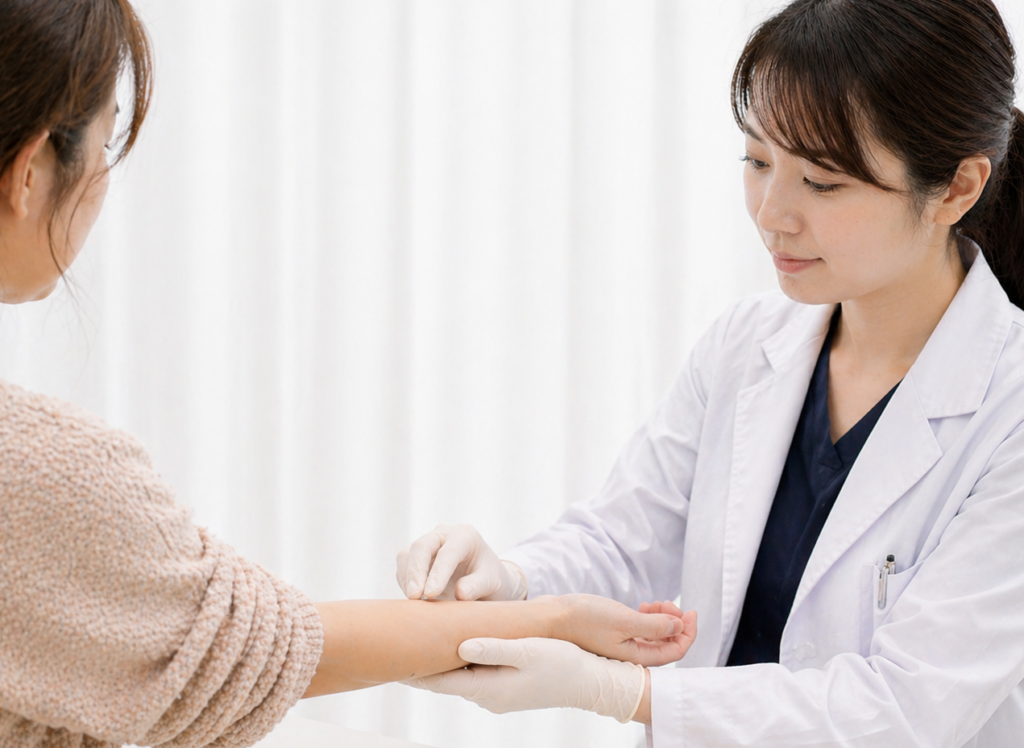
STEP 1: Examination and Consultation
First, a physician will examine the affected area and determine whether CO2 laser treatment is the appropriate option. For moles, a dermatoscope (magnifying instrument) will be used to confirm that the lesion is not malignant. We will explain the expected outcomes, risks, and costs, and will proceed with treatment only after you are fully informed and satisfied.
STEP 2: Local Anesthesia
Local anesthesia is administered using a fine-gauge needle. You may feel a brief stinging sensation at the time of injection, but there is no discomfort during the procedure itself. If you have any concerns about the anesthesia, please let us know in advance.
STEP 3: Laser Irradiation
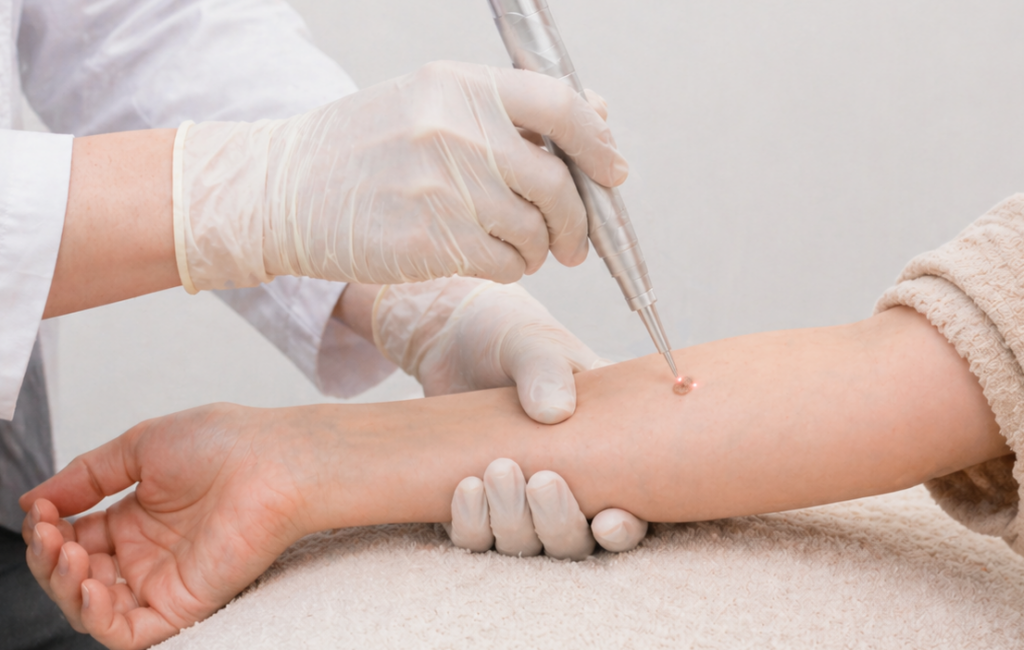
Once the anesthesia has taken effect, the CO2 laser irradiation begins. Each lesion takes approximately 5 to 10 minutes to treat. A burning smell may be noticeable during irradiation, but there is no discomfort.
STEP 4: Aftercare and Protection
After treatment, an ointment is applied to the treated area and a protective tape dressing is placed over it. The tape should be kept on for 10 to 14 days. Makeup can be applied over the tape.
Post-Treatment Recovery (Downtime)
[Day 0–3]
The treated area will be in a shallow wound state. There may be slight oozing, but this is not a concern as long as the area is protected with ointment and tape. Bathing and washing the face are generally possible from the following day.
[Days 4–10]
A scab will form. Some itching may occur, but please do not forcibly remove the scab under any circumstances. Doing so may cause scarring or post-inflammatory hyperpigmentation.
[Days 11–1 month]
The scab will naturally shed, revealing new pink skin underneath. As the skin is sensitive during this period, please take thorough precautions against UV exposure.
[1 month–6 months]
The pink skin will gradually blend in with the surrounding skin tone. Some temporary brownish post-inflammatory hyperpigmentation may occur, but this typically fades over 3 to 6 months. Please continue UV protection until the skin has fully settled.
Post-Treatment Care and Important Precautions
The outcome of CO2 laser treatment can be significantly influenced by the quality of aftercare. Please take note of the following points.
Thorough UV Protection
The skin after treatment is more susceptible to UV damage, and sun exposure can prolong post-inflammatory hyperpigmentation. Please apply a sunscreen with SPF 30 or higher every day for at least 3 months. A non-chemical (mineral) sunscreen is recommended.
Do Not Remove the Scab
The scab that forms after treatment plays an important role in the skin’s regeneration process. Forcibly removing it can cause scarring or indentation, so please wait for it to shed naturally.
Keep the Treated Area Clean
Apply the prescribed ointment twice daily (morning and evening) and protect the area with a clean tape dressing. If the tape comes off, replace it with a new one.
CO2 Laser Treatment Pricing

Pricing for CO2 laser treatment at our clinic varies depending on the type and size of the mole or wart being treated. For details, please refer to the price list for warts, moles, and skin tags.
Treatment performed for cosmetic purposes is not covered by health insurance. However, in cases where there is a functional issue — such as a wart that repeatedly bleeds due to friction with clothing — health insurance coverage may apply. Please consult with us at your appointment.
Frequently Asked Questions (FAQ)

Q. Is the procedure painful?
A. Because local anesthesia is used, discomfort during the procedure is generally minimal. You may feel a brief stinging sensation at the time of the anesthetic injection, but this typically lasts only a few seconds. After treatment, a mild stinging sensation may occur but generally subsides within 1 to 2 days.
Q. How many sessions are needed to complete treatment?
A. In many cases, treatment is completed in a single session. However, if the mole has deep roots or if recurrence occurs, additional treatment may be required. Retreatment is performed with an interval of at least 3 months.
Q. Can the condition recur?
A. If a mole has deep roots, recurrence is possible. Ablating more deeply to reduce recurrence increases the risk of scarring, which is why at our clinic we treat at an appropriate depth to minimize scarring and divide treatment into multiple sessions when necessary.
Q. Will there be any lasting marks?
A. When treatment is performed at an appropriate depth, noticeable scarring is uncommon. However, redness or post-inflammatory hyperpigmentation may be present for several months after treatment. If you have a tendency toward keloid scarring, please let us know in advance.
Q. Can I wear makeup after treatment?
A. Makeup can be applied over the protective tape dressing. Foundation can also be used to conceal the tape. Once the tape has been removed, please avoid applying makeup directly over the treated area.
Q. Can moles on areas other than the face be treated?
A. Moles on the body (back, abdomen, arms, legs, etc.) can also be treated, but areas other than the face tend to be more prone to scarring. In particular, the shoulders and chest are more susceptible to hypertrophic scarring and keloid formation, so surgical excision may be recommended depending on the location.
Q. How many lesions can be treated in a single visit?
A. Depending on the patient’s condition and treatment areas, multiple lesions can be treated in a single visit. If a large number of warts are to be treated, we may recommend dividing treatment across several sessions.
For CO2 Laser Treatment, Consult IC Clinic
CO2 laser treatment is an effective option for removing moles and warts in a short amount of time. However, it is not suitable for every condition — selecting the most appropriate treatment based on each patient’s individual symptoms is essential.
At our clinic, we propose the most suitable treatment plan through thorough examination and consultation. If you are concerned about moles or warts, please feel free to consult with us.
References
- Japan Society for Laser Surgery and Medicine. “Guidelines for Dermatological Laser Treatment (2017 Edition).” Journal of Japan Society for Laser Surgery and Medicine, 2017.
- Japanese Dermatological Association. “Diagnostic Criteria and Treatment Guidelines for Pigmented Nevi and Nevus Syndromes.” Journal of the Japanese Dermatological Association, 2019.
- Japan Society of Plastic and Reconstructive Surgery. “Research on the Safety of CO2 Laser Treatment for Skin Tumors.” Journal of Japan Society of Plastic and Reconstructive Surgery, 2018.
- Japanese Society of Aesthetic Surgery. “Guidelines for Prevention of Complications in Laser Treatment.” 2020 Edition.
- Japan Society for Photodynamic Medicine. “Biological Mechanisms and Clinical Applications of CO2 Laser.” Society Journal, 2019.
※ The above references are provided as sources of medical evidence. For actual diagnosis and treatment decisions, please consult a qualified specialist.