

This page has been supervised and written by specialist physicians at IC Clinic Shinjuku, located 3 minutes’ walk from JR Shinjuku Station.
3 Min from Shinjuku Station | Mole Removal & Treatment by a Board-Certified Plastic Surgeon
“Is it okay to leave this mole as it is?” “I want to have a mole on my face removed, but I’m worried about scarring.” — Our clinic receives over 200 mole-related consultations every month. Thanks to our Shinjuku location, we see many busy professionals who visit after work, as well as patients who travel from farther afield on weekends.
On this page, a physician certified by the Japanese Society of Plastic and Reconstructive Surgery provides a comprehensive guide to “what you should know” if you are considering mole treatment. We draw on real clinical experience to cover everything from insurance eligibility and how to choose the right treatment, to what to expect after the procedure.
First: Does Your Mole Need Treatment?
Most people considering mole treatment are motivated by cosmetic concerns—simply not liking the appearance—but there are also cases where treatment is medically advisable. If any of the following apply to you, we recommend coming in for an assessment sooner rather than later.
Signs That a Mole Should Be Examined by a Physician
Dermatologists and plastic surgeons use a standard known as the “ABCDE rule” to identify moles that may be malignant.
A (Asymmetry): The two halves of the mole are not symmetrical
B (Border): The edges are irregular, jagged, or blurred
C (Color): Uneven coloring or multiple shades present
D (Diameter): Larger than 6 mm
E (Evolution): Has grown noticeably or changed color in a short period
If even one of these applies, we perform a dermoscopy examination (detailed observation using a specialised magnifying device) for a more thorough assessment. At our clinic, this examination is carried out at every first visit. If malignancy is suspected, we arrange a prompt referral to a university hospital or cancer centre.
Moles That Interfere with Daily Life
Even when a mole is benign, treatment may be covered by health insurance if any of the following symptoms are present.
· Located on the eyelid and obstructing the field of vision
· Causing repeated bleeding during shaving
· Catching on clothing when dressing or undressing
· Getting scratched by a fingernail when washing the face
· Located where a belt or bra strap rubs against it, causing pain
These are considered to represent a functional problem and are therefore eligible for health insurance coverage.
Types and Characteristics of Moles | A Plastic Surgeon’s Perspective

Medically termed “pigmented nevi,” moles are formed by the proliferation of nevus cells—which resemble melanocytes (pigment cells)—within the skin. They may be present from birth, or may appear during the course of growth as acquired lesions.
When selecting a treatment approach, the most important factors are the mole’s depth and shape. At our clinic, we classify moles into the following four types and recommend the most appropriate treatment for each.
Flat to Slightly Raised Type Commonly Found on the Trunk (Unna Nevus)

These are commonly seen on the chest, back, and abdomen. They are typically around 1 cm in diameter, black to dark brown in color, and have a soft, nodular texture. They may gradually enlarge due to friction from clothing, and many patients find them bothersome when they develop at the neckline of a T-shirt or at belt level, where they are subject to constant rubbing.
Dome-Shaped Type Commonly Found on the Face (Miescher Nevus)

These occur frequently on the face, particularly on the nose and cheeks, and are characterised by a dome-shaped raised profile. They may have hair growing from them. With age, the color can fade toward skin tone, but the raised contour itself remains. Because they are noticeable when located in the centre of the face, this is one of the most commonly treated types.
Rapidly Growing Type Seen More Often in Younger Patients (Spitz Nevus)
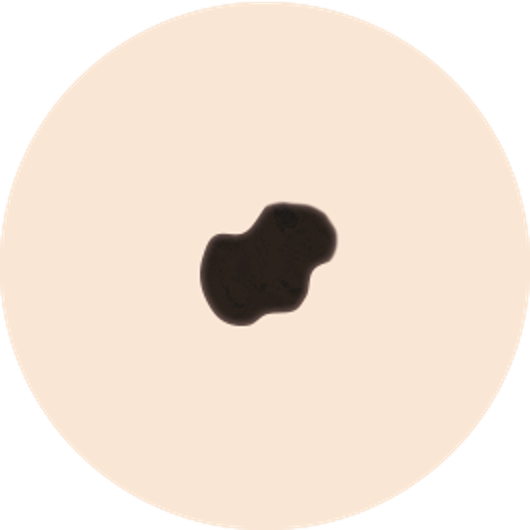
These are more commonly seen in individuals in their teens and twenties. The color ranges from red to black, and they can enlarge within a relatively short period. In rare cases, differentiation from malignant melanoma is necessary, so we recommend coming in promptly if a mole has grown suddenly.
Oval Type Found on the Limbs and Trunk (Clark Nevus)
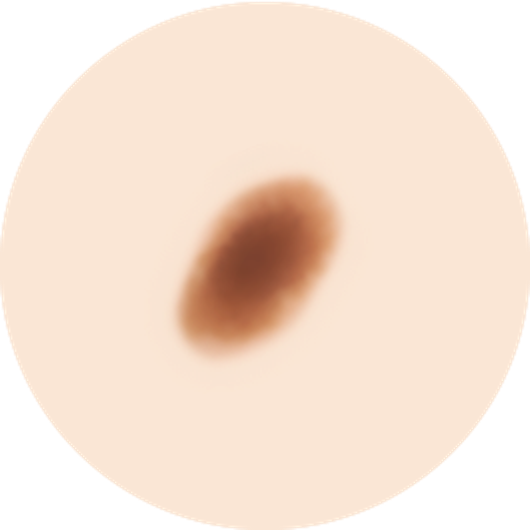
These commonly appear on the arms, legs, and trunk. They are typically oval in shape, with a darker centre that gradually fades toward the edges, and are generally less than 1 cm in diameter. The borders can be somewhat indistinct, making dermoscopy assessment particularly important.
Skin Tumours That Can Resemble Moles | How to Tell Them Apart and What to Watch For
It is not uncommon for patients to come in believing they have a mole, only for examination to reveal a different type of skin tumour. Because the appropriate treatment can differ, accurate diagnosis is essential.
Benign Tumours (Other Than Moles)
Dermatofibroma (Skin Fibroma): Commonly found on the hands and feet; a firm, black to brown nodule. It may develop following an insect bite or minor skin injury. A characteristic sign is the “dimple sign,” in which the centre dips inward when the lesion is pinched.
Neurofibroma: A benign tumour arising from peripheral nerves. It is soft and gives a sensation of sinking into the skin when pressed. When multiple lesions are present, neurofibromatosis type 1 (von Recklinghausen disease) should be considered.
Soft Fibroma (Acrochordon / Skin Tag): Skin-colored, wart-like projections commonly found in areas prone to friction, such as the neck, underarms, and groin. They increase in number with age. Small ones around the neck are also known as acrochordons.
Seborrheic Keratosis (Senile Wart): Raised, brownish, spot-like lesions seen in almost all individuals aged 60 and older. Caused by UV exposure and aging, they commonly appear on the face, temples, and neck—areas frequently exposed to sunlight. The surface has a rough, scaly texture.
Malignant Tumours That Require Attention
Basal Cell Carcinoma: One of the most frequently occurring skin cancers, developing most often on the face. It can appear black with a glossy surface and may have a depressed centre. Although it tends to progress slowly, complete excision is necessary. In cases where differentiation from a mole is difficult, a skin biopsy will be performed.
Malignant Melanoma: A form of skin cancer prone to metastasis for which early detection and early treatment are critically important. In Japan, it frequently develops on the soles of the feet. If this condition is diagnosed, we will arrange a prompt referral to a cancer centre or university hospital.
Mole Treatment at IC Clinic Shinjuku | Two Approaches and How to Choose
At IC Clinic Shinjuku, we select the most appropriate treatment from two options based on the condition of the mole and the patient’s preferences.
【Insurance-Covered】Surgical Excision and Suturing
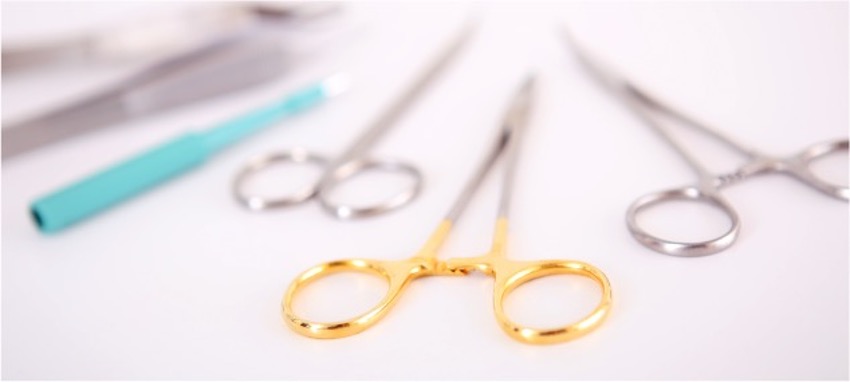
The mole is excised in a spindle (leaf) shape and the wound is closed with sutures. This method is used when a functional problem is present or malignancy is suspected, and health insurance coverage applies.
Our Approach to Excision and Suturing:
· Incisions are made along the skin’s natural relaxed skin tension lines (RSTLs) to help minimise the appearance of scarring
· Dermal suturing (deep layer closure with absorbable sutures beneath the skin) distributes tension across the wound
· Precise epidermal suturing using ultra-fine thread (6-0 and 7-0 nylon), finer than a strand of hair
· Pathological examination for a reliable diagnosis (to confirm the absence of malignant cells)
Surgical Excision May Be Suitable for:
· Those who wish to use health insurance
· Larger moles of 5 mm or more
· Those who want to definitively rule out malignancy
· Those who wish to minimise the risk of recurrence
【Self-Pay】CO2 (Carbon Dioxide) Laser
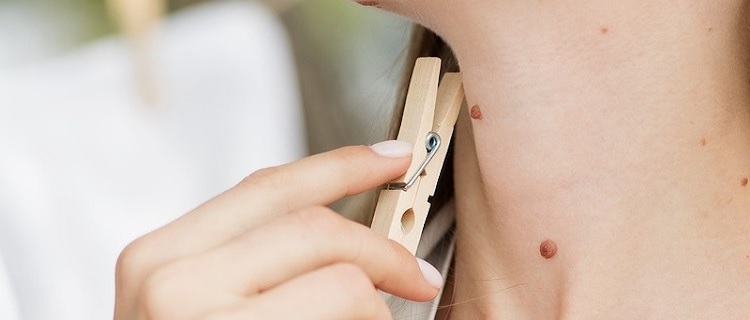
A laser absorbed by water is applied to vaporise the mole’s cells. No suturing is required, and multiple sites can be treated in a single session.
Features of CO2 Laser Treatment:
· No suturing required, so no linear scar remains post-treatment
· Relatively short downtime (in some cases, make-up can be worn from the following day)
· Multiple moles can be treated in one session
· Minimal impact on the surrounding skin
CO2 Laser Treatment May Be Suitable for:
· Smaller moles of 5 mm or less
· Those who wish to treat multiple moles at the same time
· Those who wish to avoid a sutured scar
· Those who wish to minimise downtime
※ For deeper moles, there is a possibility of recurrence. As pathological examination cannot be performed with this method, surgical excision and suturing is recommended if malignancy cannot be excluded.
Treatment Process | From First Visit to Post-Operative Care
Step 1: Consultation and Examination

We begin by listening to your concerns about the mole, then perform a dermoscopy examination to determine whether it is benign or malignant. We will then explain your treatment options, costs, and what to expect after the procedure in detail.
Step 2: Local Anaesthesia and Surgery
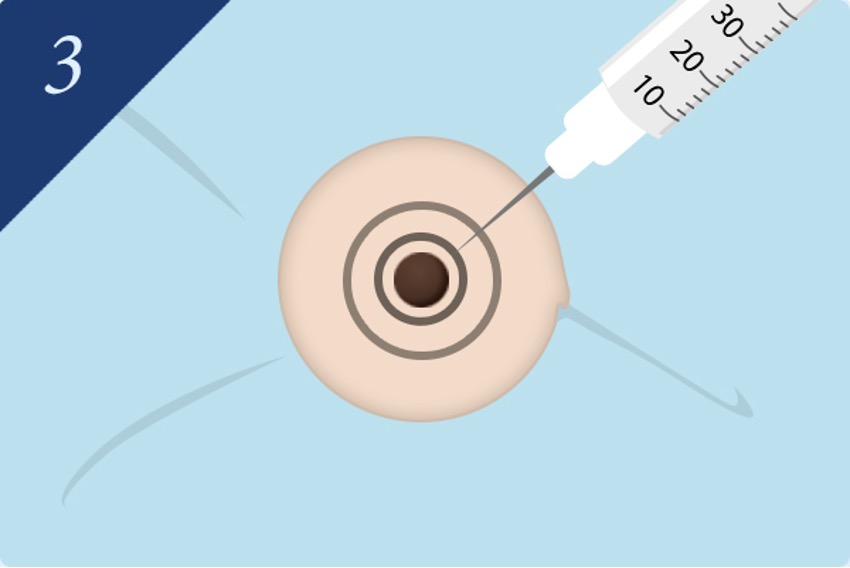
Local anaesthesia is administered using an ultra-fine needle. Once the anaesthetic has taken effect, you will not feel pain during the procedure. Surgery typically takes around 5 minutes for a small mole, and is usually completed within 20 minutes even for larger ones.
Step 3: Post-Operative Dressing and Instructions
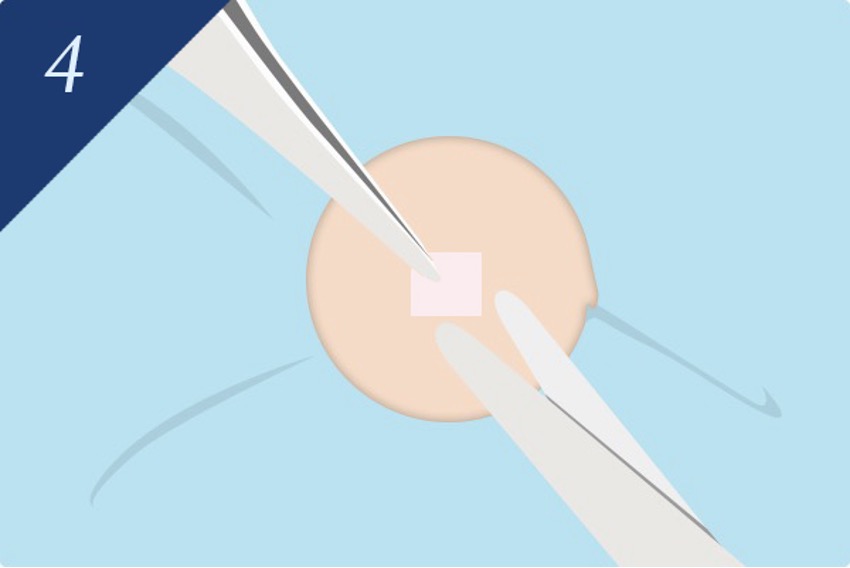
Ointment is applied and the wound is protected with gauze or a bandage. Our physician and nursing staff will provide detailed instructions on how to care for the wound at home, as well as guidance on bathing and exercise.
Step 4: Suture Removal (for Excision and Suturing)
Suture removal is scheduled approximately 1–2 weeks after surgery. The timing varies by location (face: approximately 5–7 days; trunk: approximately 10–14 days). Continuing to protect the wound with tape after suture removal helps to further improve the appearance of the scar.
Approximate Fees | Insurance-Covered and Self-Pay Treatment
Insurance-Covered Treatment (Excision and Suturing)
| Location | Surgery Fee (at 30% patient co-payment) |
| Exposed areas (face, neck, hands, etc.) | Approx. ¥5,000–¥15,000 |
| Non-exposed areas (trunk, thighs, etc.) | Approx. ¥4,000–¥13,000 |
※ In addition to the above, approximate additional costs include: initial consultation fee (approx. ¥850), follow-up consultation fee (approx. ¥220), and pathological examination fee (approx. ¥3,000).
※ Fees vary within the ranges above depending on the size and location of the mole.
※ Pathological examination is performed as a general rule (to prevent any malignant tumour from being overlooked).
Surgical Insurance Benefits
If you are enrolled in a private medical insurance plan, you may be eligible to claim a surgical benefit for procedures performed under the national health insurance system following a physician’s diagnosis. The procedure name will typically be listed as “Excision of Skin and Subcutaneous Tumor.” If a physician’s written diagnosis is required, please inform us at the time of your consultation.
FAQ
The risk of a common mole becoming cancerous is generally comparable to that of other areas of skin, and is very low. However, there are cases where a malignant lesion has been mistaken for a mole, so if you notice any concerning changes, we recommend coming in for an assessment promptly.
For surgical excision and suturing, the basic course involves two visits: the initial visit (surgery) and a follow-up for suture removal. For CO2 laser treatment, the procedure is typically completed in one session, though a follow-up visit for monitoring may be requested.
Insurance coverage applies when the mole is causing problems in daily life—for example, if it is on the eyelid and obstructs vision, if it bleeds during shaving or face washing, or if it catches on clothing when dressing or undressing. Treatment that is purely cosmetic in purpose will not be covered by insurance and will be an out-of-pocket expense.
Treatment is possible in many cases. As the eyelid and the area around the eye are delicate, a board-certified plastic surgeon will carefully plan the treatment approach. A thorough examination at your first visit will determine whether treatment is appropriate.
Local anaesthesia is used, so you will not feel pain during the surgery. There may be a brief sting when the anaesthetic is injected, but we use ultra-fine needles and adjust the injection speed to minimise discomfort as much as possible.
Unfortunately, eliminating scarring entirely is not possible. However, with plastic surgery suturing techniques, the result over time is typically a fine linear mark that becomes less noticeable. Post-operative taping and UV protection are also important steps in minimising the appearance of any scar.
For insurance-covered treatment, surgery is generally limited to one site per session based on medical necessity. For self-pay CO2 laser treatment, multiple sites may be treated simultaneously in a single session, subject to the physician’s assessment.
Please avoid both for at least 3 days after surgery. Activities that promote circulation increase the risk of bleeding and swelling. If possible, refraining until suture removal (approximately 1–2 weeks) is preferable.
Showering is permitted from the day after surgery. Please avoid scrubbing the wound and simply rinse the area gently with water. Soaking in a bathtub is best avoided until after suture removal.
Keep the wound clean and apply the prescribed ointment, then protect the area with tape. UV exposure can cause pigmentation, so using sunscreen and covering the wound with tape for UV protection is important. Taping to reduce tension on the wound is also a key factor in minimising scarring.
With surgical excision and suturing, the mole cells are removed in their entirety, so recurrence is rare. With CO2 laser treatment, cells may remain in the case of a deeper mole, making recurrence possible. If you are concerned that a mole may have recurred, please come in to discuss further treatment options.
Why Patients Choose IC Clinic Shinjuku
Team-Based Care Led by a Board-Certified Plastic Surgeon
Treatment is provided by a team of dermatologists and plastic surgeons under the guidance of a physician certified by the Japanese Society of Plastic and Reconstructive Surgery. Our focus goes beyond simply removing the mole—we are committed to achieving the cleanest possible result.
Suturing Technique Aimed at Minimally Visible Scarring
Ultra-fine suture thread, incision lines designed to follow the natural creases of the skin, and dermal suturing to distribute tension across the wound—we draw on the full range of plastic surgery techniques with the aim of leaving a scar that is as inconspicuous as possible.
Attention to Discomfort
We employ ultra-fine needles, temperature-adjusted anaesthetic solution, and slow injection speed, among other measures, to keep discomfort to a minimum. Many patients tell us the procedure was less uncomfortable than they had expected.
Same-Day Surgery Completed Quickly
Surgery takes around 5 minutes for a small mole, and is usually completed within 20 minutes even for larger ones. Treatment can be completed in a single day—ideal for those fitting an appointment around work or using a day off.
3 Minutes’ Walk from Shinjuku Station
We are located 3 minutes’ walk from the South Exit of JR Shinjuku Station. Patients visit us from across the greater Tokyo area and beyond—including those travelling from Tohoku and Okinawa for treatment.
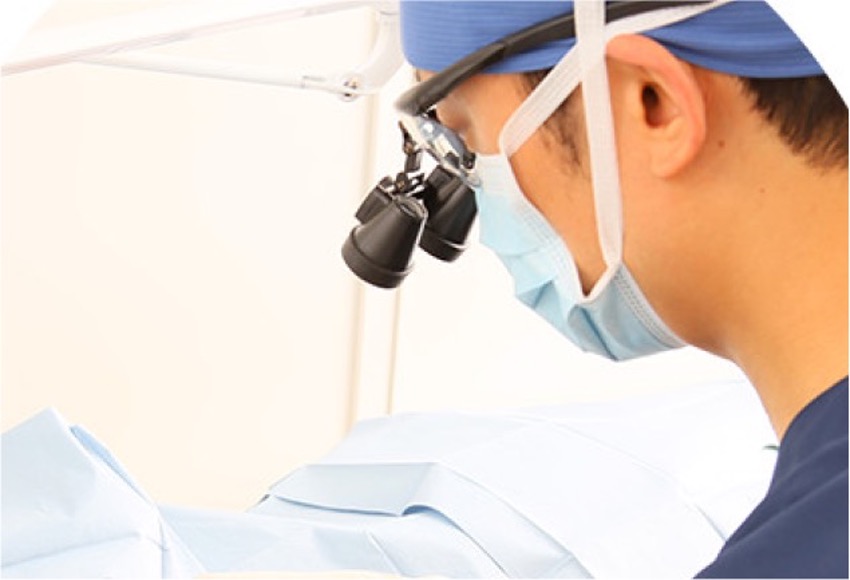
If you have concerns about a mole, please feel free to come in for a consultation. A board-certified plastic surgeon will recommend the most appropriate treatment option for you.